
Can't Live Without You
2022
No user ratings available yet
Representation score: 6.6 out of 10
Representation Score
Good
2015
Director
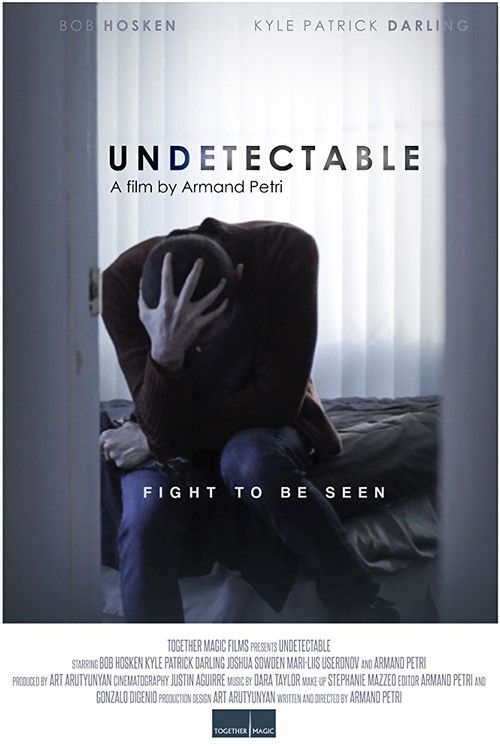
Armand Petri
Runtime
16 minutes
Average Rating
No ratings yetNew Showbiz Analysis
Undetectable is a character-driven thriller that anchors its tension in the psychological consequences of identity-specific health crises. By centering a gay man navigating the guilt of infecting a partner, the film moves queer experiences from the periphery to the core. The film succeeds in treating disability and chronic illness as integral to character's ability to drive the story rather than external melodrama. It avoids sanitizing the complexities of queer life, opting for a rigorous look at accountability and human connection. However, the film's focus remains heavily male-centric, and the lack of available data regarding racial and ethnic diversity limits a full understanding of its social breadth.
Category Breakdown
The film centers on a gay protagonist, placing queer identity at the emotional heart of the story. It explores the intersection of same-sex intimacy and the HIV/AIDS crisis.
The narrative focuses on a male-centric emotional landscape, exploring psychological fragility and vulnerability. It moves away from traditional stoic masculine archetypes.
There is insufficient information regarding the racial composition of the cast or the ethnic dynamics of the characters.
The film avoids simplistic moral dichotomies by focusing on moral relativism. It prioritizes the lived reality of a underrepresented health crisis over idealized structures.
Chronic illness is integrated into the character's psychological arc rather than serving as a mere plot device. HIV is treated as an intrinsic part of the protagonist's identity.
Present on Screen
Limited or Absent
Official Synopsis
A gay man living with HIV must confront the guilt tormenting him after betraying and infecting his terminal ex-lover.
2022

2012

2017

2014
2014

2013
2015
2000
No reviews yet. Be the first to share your thoughts on this movie!
Use the rating form above to leave a star rating and optional review.