The Mozart of Pickpockets
2006
No user ratings available yet
Diversity score: 5.9 out of 10
1999
Director
Patrick Timsit
Runtime
100 minutes
Average Rating
No ratings yetSynopsis
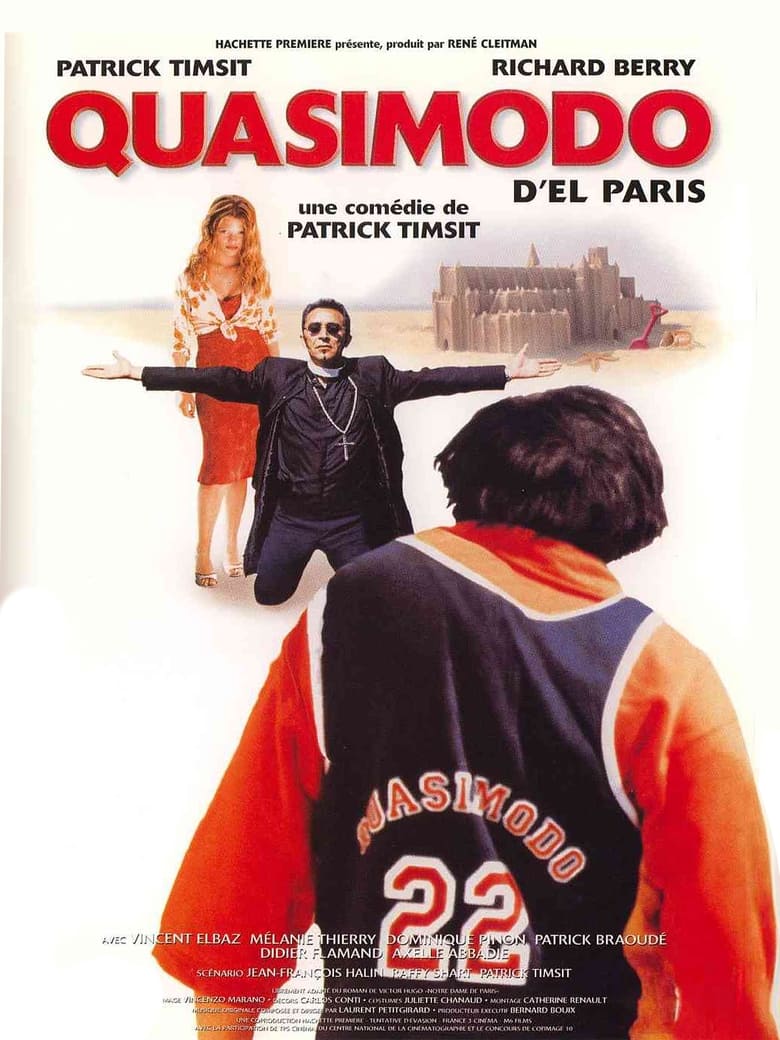
The location is the town of El Paris. When ten-year-old boy Quasimodo shows signs of deformity, his well-to-do parents place him in the charge of the town’s mysterious evangelist, Frollo. In exchange, they adopt a Cuban girl, Esméralda, from a lower social class. Ten years later, El Paris is menaced by a serial killer, and Quasimodo is the prime suspect.
Overall Score
Fair
Category Breakdown
LGBTQ+ Representation
The film lacks explicit depictions of LGBTQ+ identities or non-heteronormative relationships. The narrative focus remains on familial exchanges and the central trio of Quasimodo, Esméralda, and Frollo.
Gender Representation
The story architecture centers on male figures, including the protagonist and the authority figure Frollo. While Esméralda is a central character, her agency remains undefined within the current narrative framework.
Racial & Ethnic Diversity
The inclusion of Esméralda, a Cuban girl, introduces racial and class-based intersectionality. This presence disrupts homogeneous casting norms by placing a character of color within a high-society social exchange.
Religious & Cultural Diversity
The presence of a mysterious evangelist suggests a potential critique of religious institutions. The transactional exchange of children hints at a commentary on social status and corrupted family structures.
Disability Representation
Quasimodo is defined by his physical deformity, providing central visibility for disability. However, there is a risk that his condition serves primarily as a plot device for systemic suspicion.
Strengths
Areas for Improvement
AI Analysis
Quasimodo d'el Paris offers a moderate level of representation by centering a character with a physical disability and introducing ethnic diversity through Esméralda. The film uses these elements to explore social hierarchies and the transactional nature of class. However, the narrative leans heavily on male-coded roles and authority figures. While the presence of a Cuban character provides a necessary disruption of traditional casting, the depth of character agency for both women and people of color is not fully established. Ultimately, the film functions as a character-driven social commentary. It touches on intersectional themes of race and disability but lacks the explicit complexity needed to fully deconstruct systemic power dynamics.
No reviews yet. Be the first to share your thoughts on this movie!
Use the rating form above to leave a star rating and optional review.