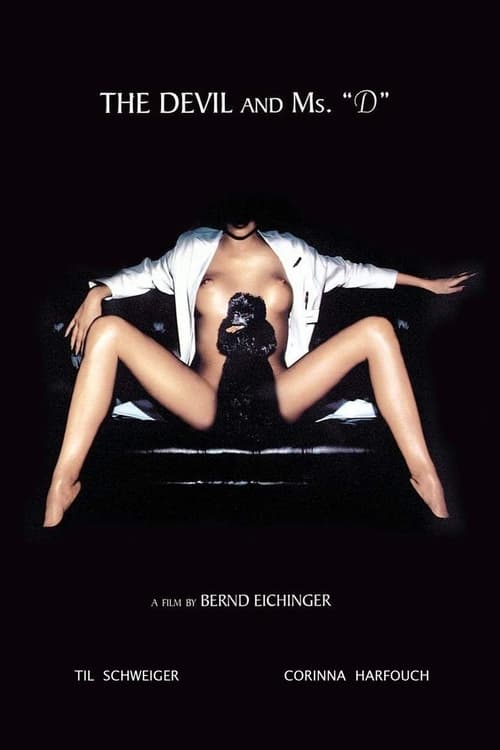
The Devil and Ms. D
1999
No user ratings available yet
Diversity score: 4.7 out of 10

1999
Director
Hans-Günther Bücking
Runtime
90 minutes
Average Rating
No ratings yetSynopsis
Two beautiful young women kill men in a villa in Tuscany: Maya and Cora have been friends since childhood. Maya has an alcoholic artist father who deserted the family, a mentally disturbed mother and a violent brother, Carlo. Cora is from a wealthy middle-class family. Cora helps Maya to poison Carlo's friend Detlef, who is threatening to blackmail her. They then kill Carlo when he tries to rape Cora. Cora's family takes Maya in, and a happy time begins for her, particularly when they spend the summer in Italy.
Overall Score
Fair
Category Breakdown
LGBTQ+ Representation
The film lacks explicit depictions of LGBTQ+ identities or non-cisnormative gender expressions. The narrative focuses almost entirely on the interpersonal dynamics between the female protagonists and the men in their lives.
Gender Representation
Maya and Cora disrupt traditional hierarchies by acting as the primary drivers of the plot. They navigate threats of blackmail and sexual assault through proactive, lethal agency rather than passive vulnerability.
Racial & Ethnic Diversity
The Tuscan setting and character descriptions suggest a predominantly Eurocentric cast. There is no evidence of non-white majority casting or efforts to challenge historical racial norms.
Religious & Cultural Diversity
The story deconstructs traditional family structures by framing the nuclear family as a site of dysfunction. It prioritizes the protagonists' autonomy over conventional legal or moral institutions.
Disability Representation
A mentally disturbed mother is mentioned, introducing themes of mental health into the narrative. It remains unclear if this character is granted agency or serves merely as a plot device.
Strengths
Areas for Improvement
AI Analysis
The film stands out for its subversion of gendered power dynamics, placing female agency at the center of a violent crime-comedy. Maya and Cora are not victims but active participants who navigate male threats through calculated actions. However, the work remains limited by a lack of racial and LGBTQ+ diversity. The setting and character profiles suggest a traditional Western framework that does not challenge Eurocentric norms or include queer identities. While the film critiques the stability of the traditional family, its exploration of mental health remains superficial. The presence of neurodivergence appears more as a backdrop for character trauma than a deep exploration of disability.
1999
2010
2019

2015
2014

2013
1997
2017
2005
No reviews yet. Be the first to share your thoughts on this movie!
Use the rating form above to leave a star rating and optional review.