Juvenile Crime
1997
No user ratings available yet
Representation score: 3.8 out of 10
Representation Score
Minimal
2004
Director
Hiromu Nakumura
Runtime
113 minutes
Average Rating
No ratings yetNew Showbiz Analysis
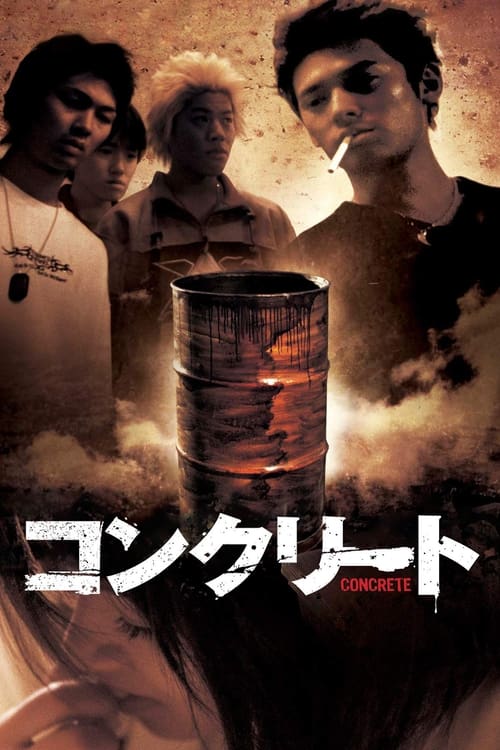
Concrete is a grim dramatization of a real-world 1988 atrocity. The film serves as a documentation of systemic and interpersonal failures rather than a vehicle for progressive representation. The narrative structure relies on extreme hierarchies of oppressor and victim, centered around gendered violence and social isolation within a specific Japanese context. It offers little room for diverse or underrepresented identities. Ultimately, the work does not aim to disrupt conventional social structures or expand the presence of diverse voices, focusing instead on the mechanics of a historical crime.
Category Breakdown
The film does not include any LGBTQ+ characters or representations of non-traditional gender identities.
The story highlights a severe power imbalance, focusing on a female victim and male aggressors. It emphasizes extreme patriarchal violence without challenging traditional gender roles.
The narrative is set in Tokyo and suggests a culturally homogeneous cast. There is no indication of racial diversity or casting actors from different backgrounds.
The film portrays the breakdown of social order through a singular, traumatic criminal event. It focuses on the visceral reality rather than deconstructing cultural norms.
The narrative does not include any characters with physical or neurodivergent disabilities.
Present on Screen
Limited or Absent
Official Synopsis
On the 25th of November 1988, four youths abducted and held Furuta Junko in the house of one of the captors. Subjected to rape, torture, and humiliation, Junko had no hope of escape as the manhunt was stalled by the captors forcing her to tell her parents that she was ok. For 41 harrowing days, Junko had to endure unimaginable suffering at the hands of these four individuals. Finally, after losing in a game of mahjong solitaire, they beat her with an iron dumbbell and set on fire with lighter fluid. She died later that day from shock. In an attempt to hide their crime they buried her in cement and thus the name 'Concrete Encased High School Murder Case' was born as Japan had to confront the horrors of this crime. The perpetrators disposed the drum in a tract of reclaimed land in Koto, Tokyo.
1997
2007

2012

2008

1995

1985
2006
2005
No reviews yet. Be the first to share your thoughts on this movie!
Use the rating form above to leave a star rating and optional review.