New Showbiz

You are here:
The Bread and Alley

The Bread and Alley

1970

Director

Abbas Kiarostami

Runtime

12 minutes

Average Rating

No ratings yet

Synopsis

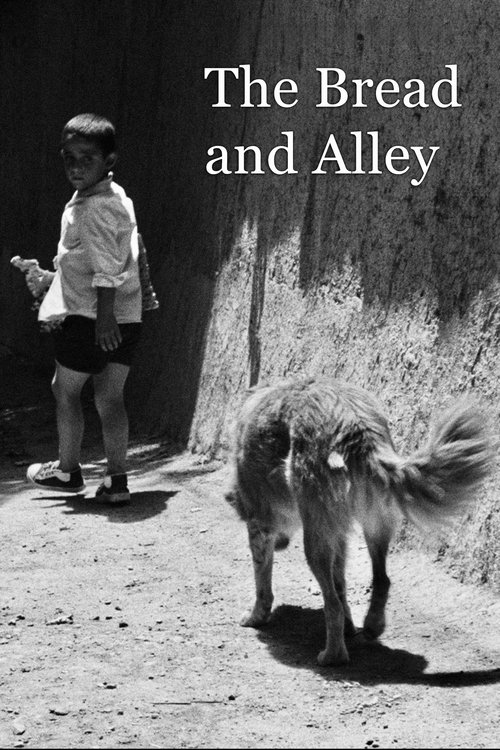
After returning from an errand to get bread, a young boy encounters a dog that frightens him making the journey to get home more difficult than he could’ve imagined.

Where to Watch

Diversity & Representation

Overall Score

5.7/10

Fair


Category Breakdown

LGBTQ+ Representation

Fair

The film focuses on a singular childhood experience involving a boy and a dog. There is no visible evidence of LGBTQ+ characters or narratives within this specific context.

Gender Representation

Fair

The narrative centers on a young male protagonist navigating psychological obstacles. While female agency is not detailed, the focus on a child's subjective experience disrupts traditional adult-centric power hierarchies.

Racial & Ethnic Diversity

Good

As Iranian cinema, the film centers a non-Western perspective. It provides meaningful representation of Middle Eastern life through a realist lens, disrupting Western-centric cinematic norms.

Religious & Cultural Diversity

Good

Kiarostami utilizes a minimalist, secular aesthetic that prioritizes the human condition over religious dogma. The narrative favors a nuanced, observational approach to reality over traditional didacticism.

Disability Representation

Minimal

The provided context contains no evidence regarding the depiction of physical or neurodivergent disabilities.

Strengths

  • Provides a meaningful, non-Western perspective through its Iranian setting.
  • Challenges Western-centric cinematic norms using a realist lens.
  • Prioritizes the human condition over religious or institutional dogma.
  • Disrupts traditional power hierarchies by focusing on a child's subjective experience.

Areas for Improvement

  • Lacks visible representation of LGBTQ+ characters or narratives.
  • Does not explicitly detail female character agency or gendered role subversion.
  • Provides no evidence regarding the depiction of physical or neurodivergent disabilities.

AI Analysis

Abbas Kiarostami’s work offers a vital departure from Western-centric storytelling by centering a localized, Middle Eastern reality. The film uses a minimalist, secular lens to explore the human condition through the eyes of a child. While the film lacks explicit representation of LGBTQ+ identities or female agency, it succeeds in challenging dominant cinematic structures. It replaces institutional dogma with a focus on subjective, individual struggle. Ultimately, the film's strength lies in its cultural specificity and its ability to present a non-Western perspective as a primary narrative driver.

How are these scores produced? →

Similar Movies

Movie poster for The Blue Umbrella

The Blue Umbrella

2005

No user ratings available yet
Diversity score: 7.0 out of 10
Movie poster for Poco… Little Dog Lost

Poco… Little Dog Lost

1977

No user ratings available yet
No diversity score available

Rate this Movie

No rating selected
Use arrow keys to select a rating from 1 to 5 stars
Optional text review, maximum 2000 characters
Tip: Wrap spoilers with ||double pipes|| to hide them
0/2000 characters
You must be signed in to submit a rating

Reviews

No reviews yet. Be the first to share your thoughts on this movie!

Use the rating form above to leave a star rating and optional review.