Killer Legends
2014
No user ratings available yet
Representation score: 5.4 out of 10
Representation Score
Fair
2020
Director
David Gregory
Runtime
104 minutes
Average Rating
No ratings yetNew Showbiz Analysis
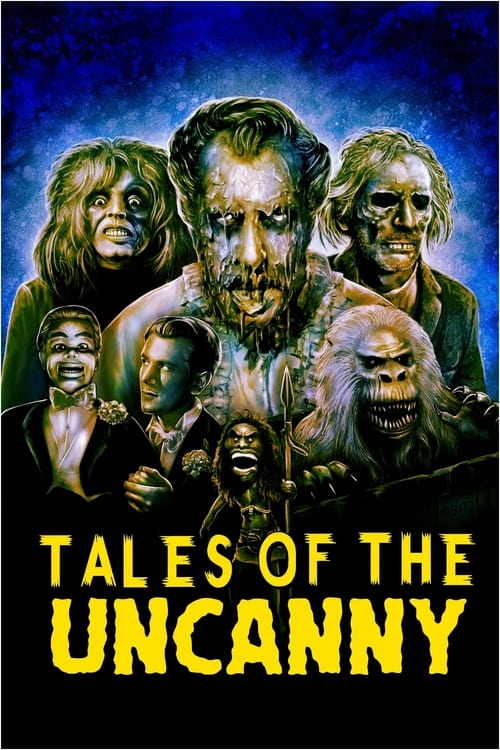
Tales of the Uncanny serves as an academic retrospective on the history of horror anthology films. Because it is a documentary focused on cinematic evolution and archival preservation, it lacks the character-driven ability to act found in scripted narratives. The film functions as a meta-commentary on genre clichés. It observes established cinematic history and the mechanics of fear rather than attempting to disrupt social hierarchies or deploy intentional characters who reflect more than one aspect of diversity. Ultimately, the work prioritizes the formal evolution of the horror genre. Its scope is defined by the historical dominance of Western traditions, resulting in a score that reflects a traditional scholarly approach.
Category Breakdown
The documentary examines the evolution of horror clichés rather than explicit LGBTQ+ narratives. While it may mention historical queer coding in horror, there is no evidence of primary LGBTQ+ character's ability to drive the story.
The film looks at the history of female roles in horror, such as the 'Final Girl' cliché. However, it acts as a historical observer rather than a tool to actively challenge gender hierarchies.
Representation reflects the historical homogeneity of Western horror traditions. The film remains tied to the traditional cinematic canon unless it specifically highlights non-Western horror movements or diverse creators.
The documentary explores how horror reflects specific cultural anxieties and societal fears. It functions primarily as a scholarly retrospective on the mechanics of fear rather than a platform for anti-Western narratives.
There is no evidence that the film focuses on neurodivergence or physical disability. It lacks specific advocacy for disability ability to act, even if the subject matter touches on disability as a horror cliché.
Present on Screen
Limited or Absent
Official Synopsis
A detailed look at the history of horror anthology films.
2014
2010
2021
2019
2005
2020

2020
2018
No reviews yet. Be the first to share your thoughts on this movie!
Use the rating form above to leave a star rating and optional review.