
Mirror
2017
No user ratings available yet
Representation score: 6.7 out of 10
Representation Score
Good
1999
Director
Kiyoshi Kurosawa
Runtime
93 minutes
Average Rating
No ratings yetNew Showbiz Analysis
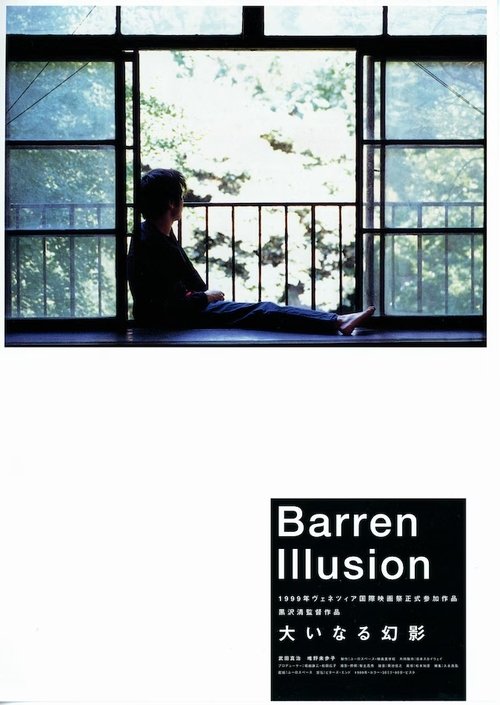
Barren Illusion explores human ability to act in a fragmented near-future society. It avoids heavy identity politics, focusing instead on how systemic instability impacts individuals. The film successfully challenges traditional gender roles by giving the female lead proactive motivations and unconventional behavior. However, it remains culturally uniform and lacks explicit LGBTQ+ representation. Ultimately, the work uses a speculative premise to examine the fragility of human connections and the collapse of social structures.
Category Breakdown
The film centers on the romantic relationship between Haru and Michi. It does not explicitly address queer identities or non-straight relationships.
Michi avoids being portrayed as passive by actively pursuing her goals and living an unconventional life. Haru challenges traditional masculinity by dealing with existential uncertainty rather than taking on a leadership role.
Set in a near-future Japan, the film maintains a culturally uniform environment. It provides a local perspective on global issues without blending multiple ethnicities.
The story criticizes the effectiveness of institutions through a near-future epidemic scenario. It emphasizes individual rebellion and personal desires over traditional communal responsibilities and religious practices.
The allergy epidemic serves as a metaphor for widespread physical vulnerability. It highlights biological fragility as a shared experience rather than a personal weakness.
Present on Screen
Limited or Absent
Official Synopsis
In a near future where allergies have become an epidemic, music producer Haru half-heartedly dates post office clerk and mail thief Michi. He searches for violent ways to reactivate his life, she dreams of escaping abroad; both volunteer to test a new drug which may provide a cure.
2017

2024

2016

2004
1998

2015
2013

2011
No reviews yet. Be the first to share your thoughts on this movie!
Use the rating form above to leave a star rating and optional review.