
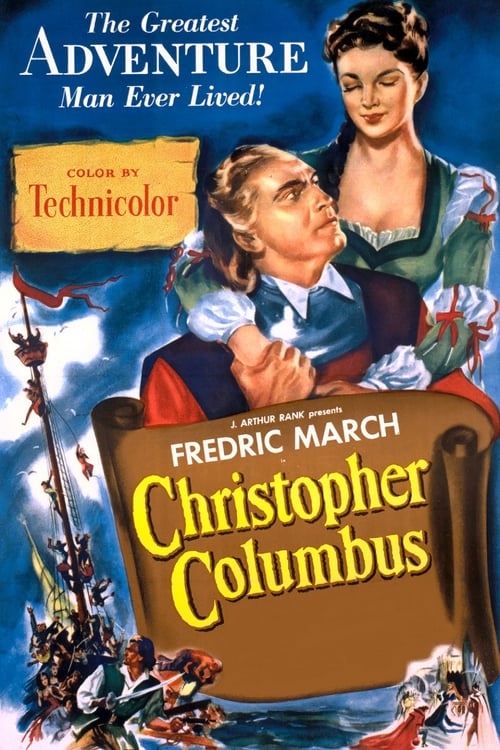
Christopher Columbus: The Discovery
1992
No user ratings available yet
Representation score: 0.6 out of 10
Representation Score
Minimal
1949
NRDirector
David MacDonald
Runtime
99 minutes
Average Rating
No ratings yetNew Showbiz Analysis
Christopher Columbus (1949) is a traditional historical epic that upholds established social hierarchies. The narrative emphasizes the roles of European male protagonists, focusing on masculinity as the main driver of historical progress. The film presents the encounter with indigenous peoples through a colonialist lens. Non-white characters are part of the cultural backdrop rather than active participants in the story. Overall, the production validates the religious and political institutions of the 15th century. It lacks the complexity needed to challenge the era's socioeconomic and imperialist structures.
Category Breakdown
The film follows a strictly heterosexual and cisgender-focused storyline. There are no depictions of LGBTQ+ identities or same-sex relationships.
Women play supporting roles within the Spanish court. The narrative centers on male-driven exploration and political strategies.
Indigenous populations are shown through a Eurocentric lens of discovery. Non-white characters appear but do not have significant roles in shaping the narrative.
The story promotes Western expansion and the influence of the Catholic Church. Imperial ambitions are framed positively.
There are no characters with visible or invisible disabilities. The film does not engage with neurodivergence or physical impairments.
Present on Screen
Limited or Absent
Official Synopsis
Christopher Columbus overcomes intrigue at the Spanish court and convinces Queen Isabella that his plan to reach the East by sailing west is practical.
1992
1944

1904

1957

2011
1951

1935
1992
No reviews yet. Be the first to share your thoughts on this movie!
Use the rating form above to leave a star rating and optional review.