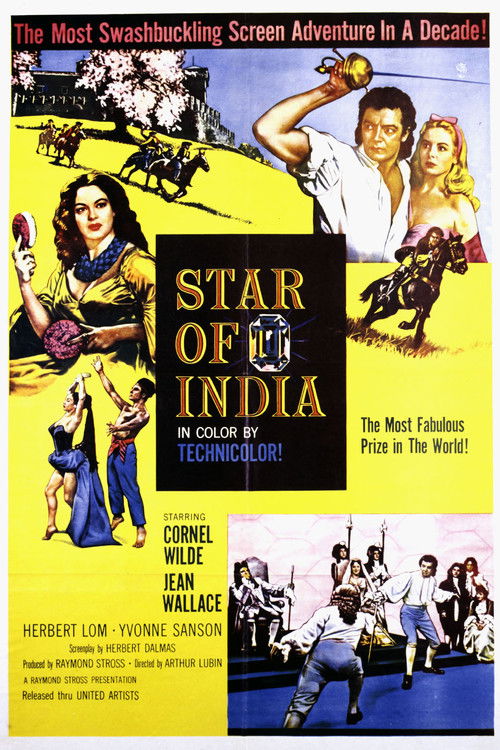
Star of India
1954
No user ratings available yet
Representation score: 2.0 out of 10

Representation Score
Minimal
1935
ApprovedDirector
Richard Boleslawski
Runtime
94 minutes
Average Rating
No ratings yetNew Showbiz Analysis
Clive of India is a classic example of 1930s cinema that upholds British imperial prestige. The narrative structure reinforces traditional hierarchies and the expansion of the Anglo-Saxon empire. It presents a worldview where colonial dominance is the primary driver of progress without offering any critique of imperialism or mercantilism. The film celebrates Western institutional power and adheres to rigid gender roles, marginalizing non-Western identities and perspectives.
Category Breakdown
The film does not depict any LGBTQ+ identities or same-sex relationships. It assumes that all characters are straight and cisgender.
Male characters have the majority of narrative ability to act, while female characters play supporting roles that reinforce traditional gender roles.
The story focuses on the British imperial project and portrays Indian characters primarily as subjects or obstacles within the colonial framework.
The film highlights the expansion of the East India Company and early capitalism from a Western perspective, emphasizing the historical progression of Western institutions.
There is no discernible focus on visible or invisible disabilities. Characters are defined by military rank or socioeconomic status.
Present on Screen
Limited or Absent
Official Synopsis
Fort St. David, Cuddalore, southern India, 1748. While colonial empires battle to seize an enormous territory, rich in spices and precious metals beyond the wildest dreams, and try to gain the favor of the local kings, Robert Clive (1725-1774), a frustrated but talented clerk who works for the East Indian Company and struggles to earn his fortune, makes a bold decision that will change his life forever.
1954

1939

1936

1940

1959

1935

1938

1961
No reviews yet. Be the first to share your thoughts on this movie!
Use the rating form above to leave a star rating and optional review.