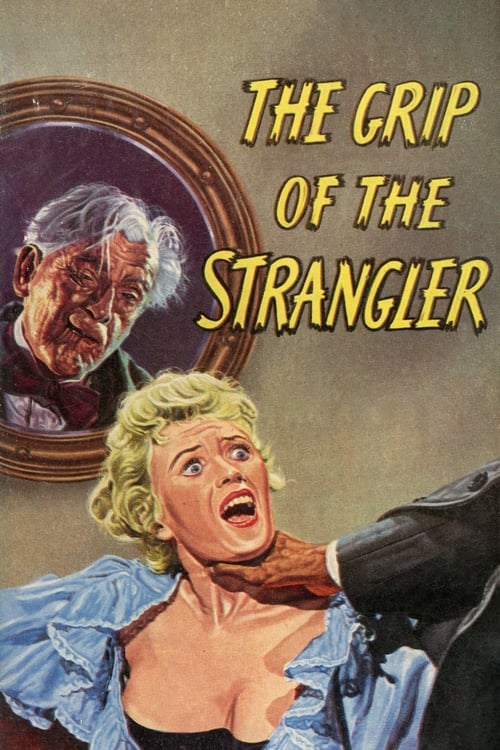
Grip of the Strangler
1958
No user ratings available yet
Diversity score: 2.1 out of 10

1958
Not RatedDirector
Robert Day
Runtime
86 minutes
Average Rating
No ratings yetSynopsis
In 1840s London, Dr. Thomas Bolton [Boris Karloff] dares to dream the unthinkable: experimenting with anesthesia gases to make surgery pain-free. While doing so, his demonstration before a panel of his peers ends in a horrific mishap with his patient awakening under the knife; he is forced to leave his position in disgrace. To complicate matters, he becomes addicted to his own chemical experiments and gets involved with a criminal gang led by Black Ben [Francis de Wolff], and a ruthless killer Resurrection Joe [Christopher Lee]. Unfortunately, this shady partnership leads Dr. Bolton to further ruin, culminating in his unwitting participation in murder — for which he becomes the first victim of a blackmail scheme.
Overall Score
Minimal
Category Breakdown
LGBTQ+ Representation
The film contains no documented LGBTQ+ characters or non-heteronormative identities. The narrative focuses entirely on the protagonist's professional disgrace and criminal involvement.
Gender Representation
The story is heavily centered on male-dominated spheres like medicine and crime. Female agency is notably absent, as the plot revolves around conflicts between men.
Racial & Ethnic Diversity
Characters exist within a predominantly white social framework. While the name 'Black Ben' suggests non-Anglo-Saxon presence, it functions within established period crime tropes.
Religious & Cultural Diversity
The film operates within a traditional Western framework of individual morality. It lacks anti-institutional critiques, portraying social breakdown as a personal failure.
Disability Representation
There is no meaningful portrayal of disability. Addiction and medical mishaps serve as plot drivers for horror rather than nuanced explorations of neurodivergence.
Strengths
Areas for Improvement
AI Analysis
Corridors of Blood is a traditional mid-century genre piece that adheres strictly to the social and narrative conventions of its era. The film prioritizes a singular, character-driven descent into Victorian criminality over any exploration of systemic social structures or intersectional identities. The narrative architecture focuses on individual pathology and moral decay. By centering the drama on the professional and personal downfall of Dr. Bolton, the film avoids broader social critiques in favor of Gothic suspense and personal tragedy. Ultimately, the film lacks intentionality regarding diverse representation. It functions as a standard crime thriller that reinforces the traditional hierarchies and social constraints of 1840s London.
No reviews yet. Be the first to share your thoughts on this movie!
Use the rating form above to leave a star rating and optional review.