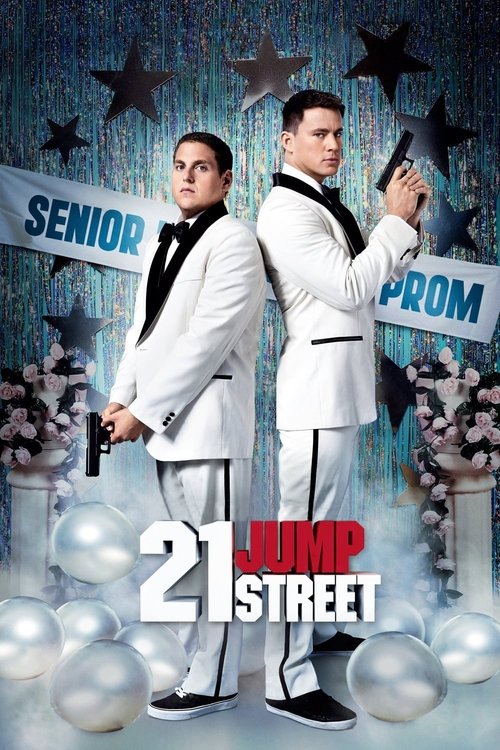
21 Jump Street
2012
No user ratings available yet
Representation score: 7.8 out of 10

Representation Score
Good
2014
RDirector
Phil Lord, Christopher Miller
Runtime
112 minutes
Average Rating
No ratings yetNew Showbiz Analysis
22 Jump Street is a postmodern deconstruction of the buddy-cop genre. It uses self-referential humor to criticize social hierarchies and institutional authority through its protagonists' experiences. The film effectively explores complex social structures and identity through a diverse college setting. However, it remains confined by its focus on male-driven dynamics and lacks significant LGBTQ+ or disability representation.
Category Breakdown
The film follows a traditional structure that assumes everyone is straight or cisgender. It doesn't include significant LGBTQ+ characters or stories that question conventional romantic and social norms.
The movie centers around a male-dominated buddy-cop dynamic. Female characters appear in the college setting but often play minor roles compared to the main male partnership.
A diverse college environment allows for exploring social differences. The main characters interact with various social groups, breaking the uniformity usually found in police procedurals.
The story challenges traditional institutions by presenting disregard for police rules as humorous freedom. It also mocks consumerism and social status.
The film does not engage meaningfully with disability representation. Characters with disabilities are not central to the plot or character development.
Present on Screen
Limited or Absent
Official Synopsis
After making their way through high school (twice), big changes are in store for officers Schmidt and Jenko when they go deep undercover at a local college. But when Jenko meets a kindred spirit on the football team, and Schmidt infiltrates the bohemian art major scene, they begin to question their partnership. Now they don't have to just crack the case - they have to figure out if they can have a mature relationship. If these two overgrown adolescents can grow from freshmen into real men, college might be the best thing that ever happened to them.
2012

2012

2013
2011

2010
1996
2014
2007
No reviews yet. Be the first to share your thoughts on this movie!
Use the rating form above to leave a star rating and optional review.