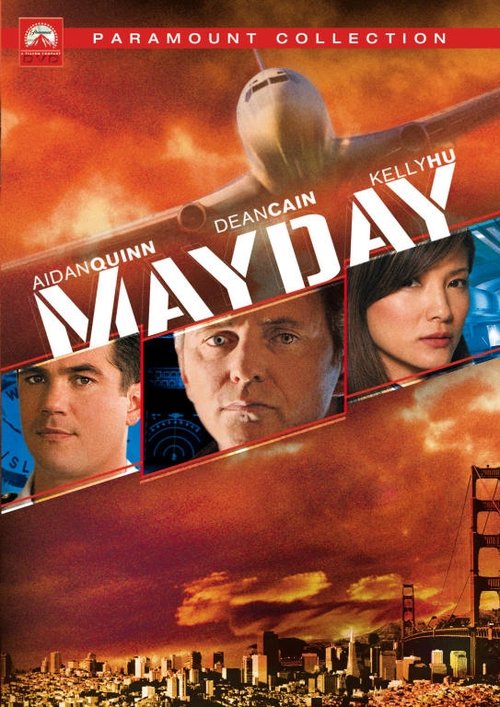
Mayday
2005
No user ratings available yet
Diversity score: 2.9 out of 10

1973
Director
David Lowell Rich
Runtime
73 minutes
Average Rating
No ratings yetSynopsis
A group of skiers are trapped inside a runaway train hurtling down a mountainside.
Overall Score
Minimal
Category Breakdown
LGBTQ+ Representation
The film operates within a strictly heteronormative framework. There are no discernible queer narratives or non-cisnormative identities present in the story.
Gender Representation
Character dynamics rely on traditional hierarchies. Male characters typically hold the agency in crisis management, while female characters often occupy reactive or vulnerable roles.
Racial & Ethnic Diversity
Casting reflects the homogeneous trends of 1970s Western media. The film lacks significant racial intersectionality or a deliberate effort toward diverse ethnic inclusion.
Religious & Cultural Diversity
The narrative prioritizes survivalist ethics over ideological critique. It does not engage with systemic power structures or challenge Western institutional norms.
Disability Representation
There is no evidence of characters with visible or invisible disabilities. The focus remains entirely on the physical mechanics of the train and immediate survival.
Strengths
Areas for Improvement
AI Analysis
Runaway! is a genre-driven thriller that prioritizes high-stakes tension over sociological depth. As a product of 1973, it adheres to the exploitation-style conventions of its era, focusing on physical peril within a contained setting. The film relies heavily on established archetypes, particularly regarding gender and race. It lacks the intentionality needed to disrupt social hierarchies, instead mirroring the homogeneous casting and traditional power structures common in 1970s television. Ultimately, the production functions as a standard survivalist tale. It avoids complex themes of identity or systemic critique, favoring plot-driven momentum and conventional character roles.
2005
1978

2023
2015

2019

2022
1990
1979

2019

2007
1994
1973
No reviews yet. Be the first to share your thoughts on this movie!
Use the rating form above to leave a star rating and optional review.