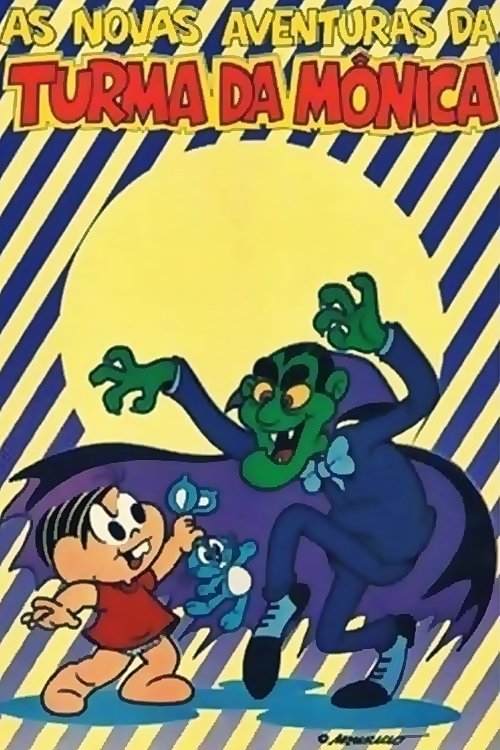
As Novas Aventuras da Turma da Mônica
1986
No user ratings available yet
Diversity score: 4.6 out of 10

1982
Director
Mauricio de Sousa
Runtime
75 minutes
Average Rating
No ratings yetSynopsis
Embarking on a whimsical adventure, Monica and her friends take center stage in four captivating tales. The first, "O Plano Infalível," showcases Jimmy Five's latest scheme to defeat Monica and her indomitable bunny companion. In "Um Amor de Ratinho," Monica attends a costume party dressed as a mouse, unaware that a small mishap would awaken a genuine mouse's affectionate feelings towards her. The third story, "A Ermitã," sees Monica bid farewell to her friends, venturing alone into the heart of the forest to live an independent life. Lastly, in "O Império Empacota," Jimmy Five's courage and true affection for Monica are unveiled when he fearlessly engages in an interplanetary battle against aliens, all in an effort to save his beloved big-toothed friend.
Overall Score
Limited
Category Breakdown
LGBTQ+ Representation
The film adheres to conventional heteronormative structures. Romantic interests are framed through traditional, whimsical lenses, such as Jimmy Five's protective impulses.
Gender Representation
Monica displays significant physical strength and agency, resisting Jimmy Five's schemes. However, the narrative still utilizes tropes where the strong female is an object of male affection.
Racial & Ethnic Diversity
Characters reflect a multi-ethnic Brazilian spectrum through design. However, the stories focus on individual adventures rather than exploring racial identity or systemic diversity.
Religious & Cultural Diversity
The film emphasizes community and friendship within a standard moral framework. It does not prioritize secularism or offer critiques of traditional institutions.
Disability Representation
There is no explicit depiction of physical or neurodivergent disabilities. Characters are defined by personality and physical prowess, which may lean toward ableist standards of heroism.
Strengths
Areas for Improvement
AI Analysis
This 1982 anthology prioritizes whimsical, character-driven storytelling over modern intersectional frameworks. While the characters are foundational to Brazilian pop culture, the narrative architecture remains rooted in the social norms of its era. Monica serves as a notable figure of agency, disrupting the trope of the submissive female through her strength. Yet, the film often reverts to traditional dynamics, such as male characters acting as protectors in high-stakes scenarios. Ultimately, the work functions as a reflection of a multi-ethnic society through character design rather than a deliberate exploration of racial or systemic hierarchies.
1986
1981
1987
2007

1990
No reviews yet. Be the first to share your thoughts on this movie!
Use the rating form above to leave a star rating and optional review.