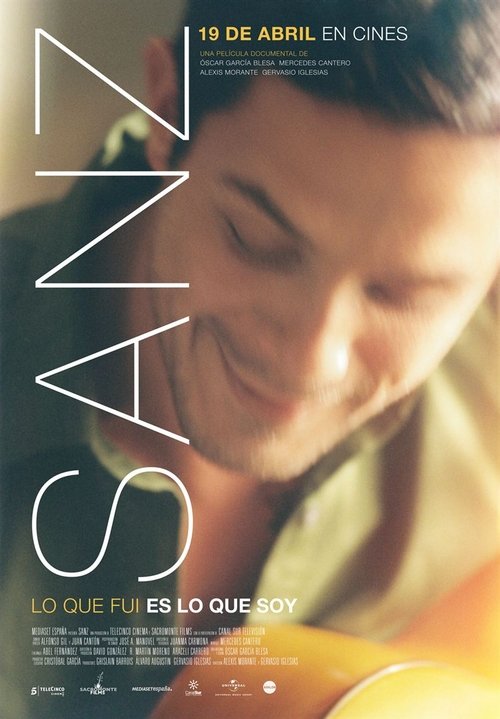
Alejandro Sanz: What I Was Is What I Am
2018
No user ratings available yet
Representation score: 3.2 out of 10

Representation Score
Fair
2016
Director
David Álvarez García
Average Rating
No ratings yetNew Showbiz Analysis
This documentary serves as a historical record of social disruption during the Spanish Transition. It captures a movement defined by its rejection of established social norms and state dominance. The film's strength lies in its focus on anti-authoritarianism and the celebration of non-conformity. By documenting the Madrid punk scene, it highlights how subcultures challenge dominant cultural hierarchies. However, the work lacks depth in showing how different aspects of identity intersect. The historical setting is geographically and racially localized, and there is little evidence of diverse representation regarding women's roles or disabilities.
Category Breakdown
The film explores a subculture historically known for providing sanctuary to non-normative identities. It likely examines the friction between queer expressions and the conservative social structures of 1980s Spain.
Punk aesthetics inherently challenge traditional gender hierarchies and domestic expectations. However, the film's specific portrayal of women's roles or the deconstruction of masculinity remains unverified.
The documentary focuses on a localized movement in Madrid. Given the historical context of the 1980s Spanish music scene, the representation appears largely homogeneous.
The documentary celebrates a movement defined by its opposition to traditional institutions. It aligns with themes of systemic critique by centering anti-authoritarian and anti-capitalist narratives.
There is no evidence that disability or neurodivergence serve as central themes or featured character arcs within this documentary.
Present on Screen
Limited or Absent
2018
2016

2023
2021
2012

2002

2019
2021
No reviews yet. Be the first to share your thoughts on this movie!
Use the rating form above to leave a star rating and optional review.