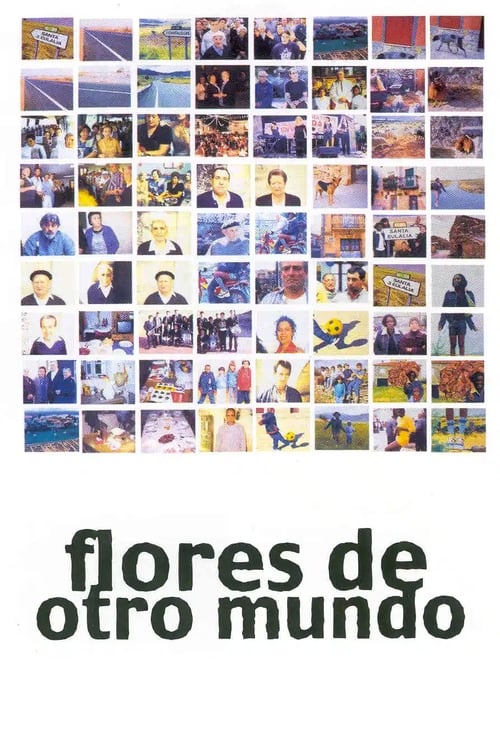
Flowers From Another World
1999
No user ratings available yet
Diversity score: 7.6 out of 10

2000
Director
Icíar Bollaín
Runtime
20 minutes
Average Rating
No ratings yetSynopsis
The two million Spanish women who are victims of domestic violence and the death each week of a woman at the hands of her partner is not fiction but pure reality.
Overall Score
Good
Category Breakdown
LGBTQ+ Representation
The narrative focuses on domestic violence within heteronormative structures. It lacks visible non-cisnormative representation, prioritizing a critique of traditional patriarchal relationships instead.
Gender Representation
The film subverts traditional hierarchies by centering the lived experiences of female protagonists. It dismantles the archetype of male authority and challenges romanticized domestic roles.
Racial & Ethnic Diversity
The production reflects the demographic reality of Spain's social fabric. Without specific character breakdowns, the focus appears to be on a specific national social crisis.
Religious & Cultural Diversity
The work critiques the sanctity of the nuclear family and patriarchal marriage as sites of oppression. It frames domestic violence as a systemic societal crisis.
Disability Representation
While physical disabilities are not explicitly mentioned, the film explores the psychological trauma of abuse. It treats mental health impacts with significant narrative agency.
Strengths
Areas for Improvement
AI Analysis
Icíar Bollaín’s work is a powerful exercise in social realism that deconstructs traditional power hierarchies. By centering the systemic reality of domestic violence against women, the film successfully shifts the focus from male authority to female survival and agency. The film's strength lies in its structural critique of the patriarchal family unit. It refuses to uphold traditional domestic ideals, instead framing violence as a broader societal failure rather than an isolated incident. However, the narrative lacks intersectional breadth. The focus remains heavily on heteronormative structures and specific Spanish demographics, offering limited visibility for LGBTQ+ identities or multicultural perspectives.
1999

2017
2000

2000
2006

2022
2015
2022
2020
1978

2026
1994
No reviews yet. Be the first to share your thoughts on this movie!
Use the rating form above to leave a star rating and optional review.