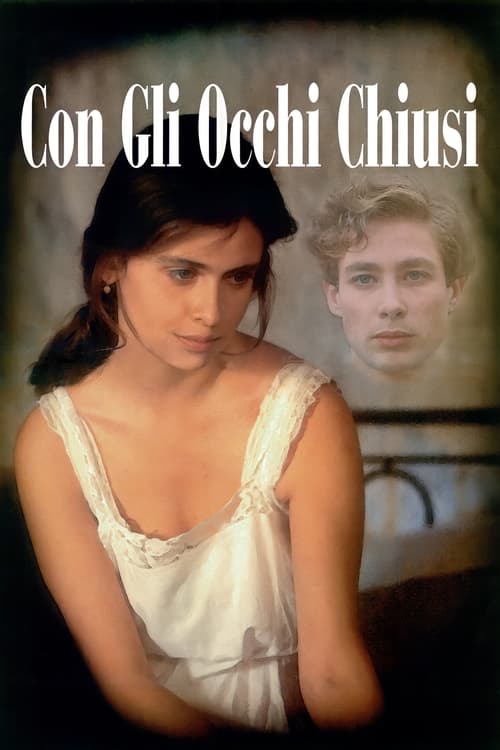
With Closed Eyes
1994
No user ratings available yet
Representation score: 4.8 out of 10
Representation Score
Fair
2003
UnratedDirector
Pupi Avati
Runtime
107 minutes
Average Rating
No ratings yetNew Showbiz Analysis
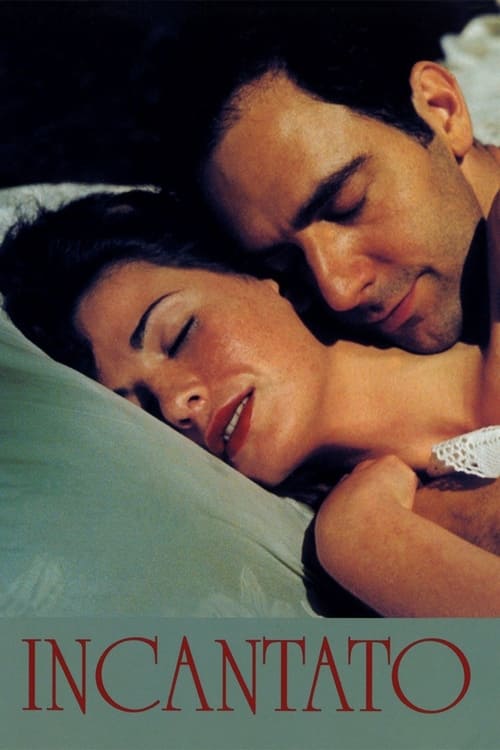
Incantato is a traditional period drama that prioritizes historical authenticity and classical romantic themes. It functions as a character study of longing and disillusionment within a specific era. The film provides a nuanced portrayal of disability through Angela, whose blindness is a functional part of the narrative rather than a mere cliché. This adds depth to the protagonist's romantic journey. However, the film adheres strictly to the social and ethnic norms of its 1920s Italian setting. It lacks the way different parts of someone's identity overlap, offering a conventional narrative that does not challenge the era's patriarchal or homogeneous structures.
Category Breakdown
The story centers on a traditional romantic pursuit where Nello searches for an idealized love. There are no explicit depictions of non-straight or non-cisgender identities or same-sex relationships.
Angela uses her emotions to navigate Nello's idealism, securing her own stability. However, the power dynamics in their relationship reflect traditional courtship rituals of 1920s Italy.
The cast is ethnically uniform, reflecting the historical reality of 1929 Italy. The film focuses on local social hierarchies rather than multiculturalism or diverse backgrounds.
The film is deeply influenced by the Catholic Church and strict social norms. It portrays these institutions as a restrictive backdrop without critiquing them.
Angela's blindness is integrated into her identity and the plot's emotional stakes. The portrayal avoids inspirational clichés, focusing instead on how sensory experience shapes romantic connections.
Present on Screen
Limited or Absent
Official Synopsis
Rome, 1929. The Pope's tailor sends his only son, 35-year-old virgin Nello, to more liberal Bologna hoping he'll find a wife. His head brimming with ideas on romantic love induced by classical poetry, Nello falls for Angela, a beautiful blind woman who indulges him only to win back her fiancé.
1994
1995
1974
1957
1991
1927
2001
1990
No reviews yet. Be the first to share your thoughts on this movie!
Use the rating form above to leave a star rating and optional review.