The Jupiter Enigma
2018
No user ratings available yet
Representation score: 3.1 out of 10
Representation Score
Minimal
2021
Director
David Sky Brody
Runtime
51 minutes
Average Rating
No ratings yetNew Showbiz Analysis
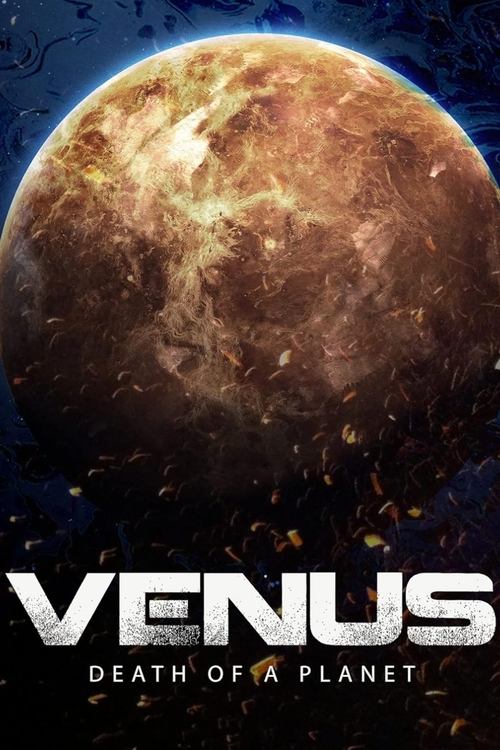
Venus: Death of a Planet is a scientific exploration of planetary evolution and astrobiology. Given its focus on non-human subjects, such as the planet Venus and its atmosphere, the film lacks the narrative structure needed to explore social identities or social power dynamics. Instead, it centers on empirical data and astronomical observations, which limits its ability to address issues related to gender, race, or disability. The documentary prioritizes a scientific perspective, focusing on the geological and atmospheric processes of Venus, which inherently restricts its capacity to engage with human-centric social issues.
Category Breakdown
The documentary focuses entirely on planetary science and atmospheric composition. It lacks human character arcs or interpersonal relationships necessary to depict non-assuming gender matches what was assigned at birth identities.
The narrative centers on geological processes and scientific discovery. There is no engagement with gendered social roles or subversion of gender hierarchies.
The subject matter is astronomical and cosmological. The film focuses on the toxic atmosphere of Venus rather than providing narrative ability to act for people of color.
The film emphasizes a scientific approach to understanding Venus, avoiding religious themes and focusing instead on empirical data and astronomical observations.
The film does not include any human characters or subjects, so it does not address issues related to physical or neurological differences.
Present on Screen
Limited or Absent
Official Synopsis
Billions of years ago, Venus may have harbored life-giving habitats similar to those on the early Earth. Today, Earth's twin is a planet knocked upside down and turned inside out. Its burned-out surface is a global fossil of volcanic destruction, shrouded in a dense, toxic atmosphere. Scientists are now unveiling daring new strategies to search for clues from a time when the planet was alive.
2018
2008
2015
2013
2010
2021
2007
2007
No reviews yet. Be the first to share your thoughts on this movie!
Use the rating form above to leave a star rating and optional review.