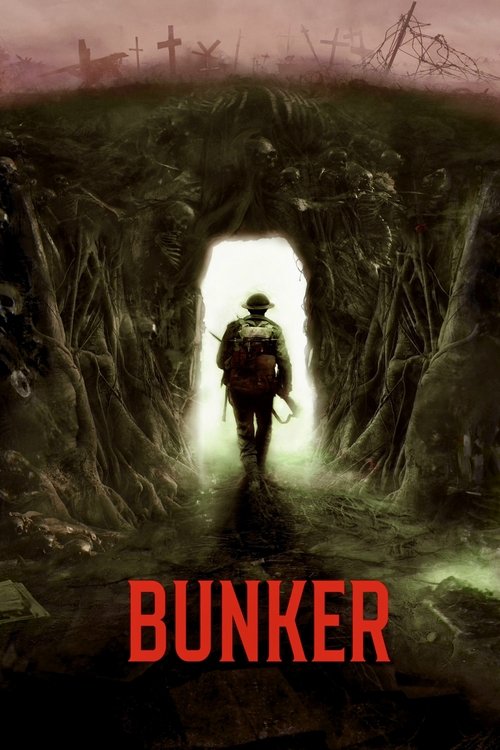
Bunker
2023
No user ratings available yet
Representation score: 2.9 out of 10

Representation Score
Limited
2026
Director
Pakphum Wongjinda, Chalit Krileadmongkon
Runtime
95 minutes
Average Rating
No ratings yetNew Showbiz Analysis
The film opens with the grueling reality of the Thai-Burma railway, where Japanese soldiers whip ethnic locals into submission. This historical backdrop sets the stage for a horror narrative where the true monster is not just the "Omukade" in the shadows, but the dehumanizing machinery of empire. Sanor, a Thai woman, emerges as the only character with genuine agency, guiding the trapped group through the mine with a map drawn by her father. Her competence contrasts sharply with the bickering, incompetent male soldiers who are slowly picked off by the creature. The film’s argument is clear: the war is a shared nightmare that reduces all parties to prey. The Japanese soldiers, who began as oppressors, are now helpless victims of the same darkness they helped create. The ending does not offer a nationalist victory or a moral lesson about the war’s outcome; instead, it focuses on the immediate, visceral terror of survival. The last image is one of shared helplessness, with the characters trapped in the mine, their ranks and nationalities irrelevant in the face of the ancient evil. The film’s strengths lie in its atmospheric horror and its use of historical context to deepen the sense of dread. The casting of Japanese and Thai actors in their respective roles adds authenticity to the depiction of wartime dynamics. However, the narrative remains constrained by its reliance on the "monster in the cave" trope, which can feel somewhat derivative. The gender dynamics are traditional, with the female lead serving as the moral compass while the male characters struggle with their own survival. Ultimately, *Omukade* is a competent horror film that uses its historical setting to create a sense of claustrophobic dread. It does not break new ground in terms of representation or narrative structure, but it effectively delivers a tense and atmospheric viewing experience. The film’s focus on the shared terror of the trapped group, regardless of their national or military affiliations, provides a subtle critique of the war’s dehumanizing effects.
Category Breakdown
No queer characters or same-sex intimacy appear. The social order is strictly heteronormative, defined by military rank and gendered labor. The film offers no alternative frameworks for identity or relationship.
Sanor acts as the competent guide, navigating the mine while male soldiers bicker. Her authority is practical, yet the narrative frames female presence through the Commander’s objectification of service girls and the threat of sexual violence.
The cast mixes Japanese, Thai, and British characters, with ethnic locals named as the oppressed labor force. The film depicts Japanese as antagonistic colonizers and Thai subjects as exploited, grounding the horror in historical racial hierarchy.
The film critiques Imperial Japanese Army brutality, depicting forced labor and village raids. The ending rejects nationalist triumph, focusing instead on the shared, inescapable terror of the trapped group and the futility of the war machine.
No characters with physical, sensory, or cognitive impairments are depicted. The horror relies on supernatural threats and physical exhaustion rather than disability as a narrative element.
Present on Screen
Limited or Absent
Official Synopsis
Thailand, 1941 — a handful of Japanese soldiers and their prisoners are trapped in a cursed mine. As tensions between enemies reach a breaking point, they are forced to confront a terrifying, ancient monster lurking in the shadows.
2023
2007

2017
2021
2024

2022

2025
2025
No reviews yet. Be the first to share your thoughts on this movie!
Use the rating form above to leave a star rating and optional review.