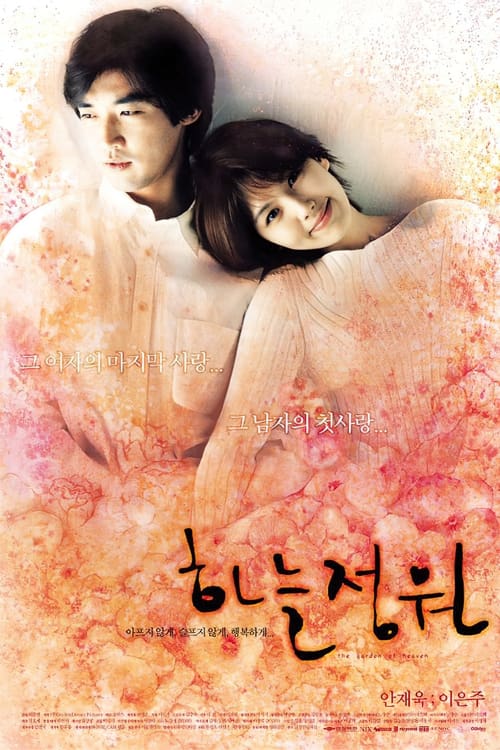
The Garden of Heaven
2003
No user ratings available yet
Representation score: 7.0 out of 10

Representation Score
Fair
2003
Director
Lee Jeong-wook
Runtime
109 minutes
Average Rating
No ratings yetNew Showbiz Analysis
Scent of Love is a traditional South Korean melodrama that emphasizes intense emotionality and tragic romantic arcs. The narrative follows a classic storyline of enduring personal tragedy, adhering to early 2000s genre conventions. While the film offers emotional depth through its main characters, it does not aim to challenge systemic social structures. It operates within a traditional framework that emphasizes established social and romantic hierarchies. The film's focus remains on interpersonal connections and the sanctity of devotion. It lacks the complexity or narrative subversion needed to go beyond standard genre formulas.
Category Breakdown
The film highlights a central romantic relationship that upholds traditional heterosexual norms. It does not include any characters with non-binary gender identities or critique traditional romance.
The story revolves around the female protagonist's strength during her illness. However, the narrative may rely on the 'tragic heroine' stereotype, which defines femininity through sacrifice and suffering.
As a South Korean production, the film features a cast that reflects a single cultural background. It operates within a single cultural framework without blending different races.
The film aligns with traditional dramatic values and social structures. It emphasizes romantic devotion and interpersonal bonds rather than secular or anti-Western themes.
The plot centers on the protagonist's medical condition. Using illness as a narrative device to evoke sympathy risks sidelining the portrayal of disability through independent ability to act.
Present on Screen
Limited or Absent
Official Synopsis
In-ha and Hee-jae were together in college and meet again after years. Their love is being tested when Hee-jae finds out she is ill.
2003

2002

2006

2012

2009

1998
2006

2021
No reviews yet. Be the first to share your thoughts on this movie!
Use the rating form above to leave a star rating and optional review.