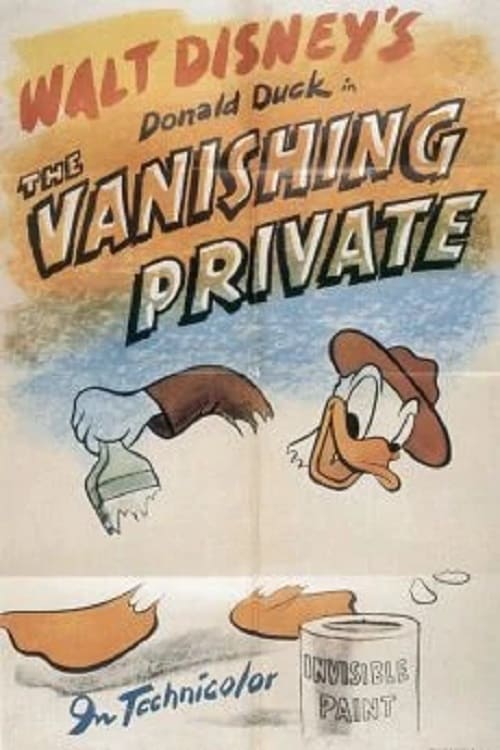
The Vanishing Private
1942
No user ratings available yet
Diversity score: 1.4 out of 10
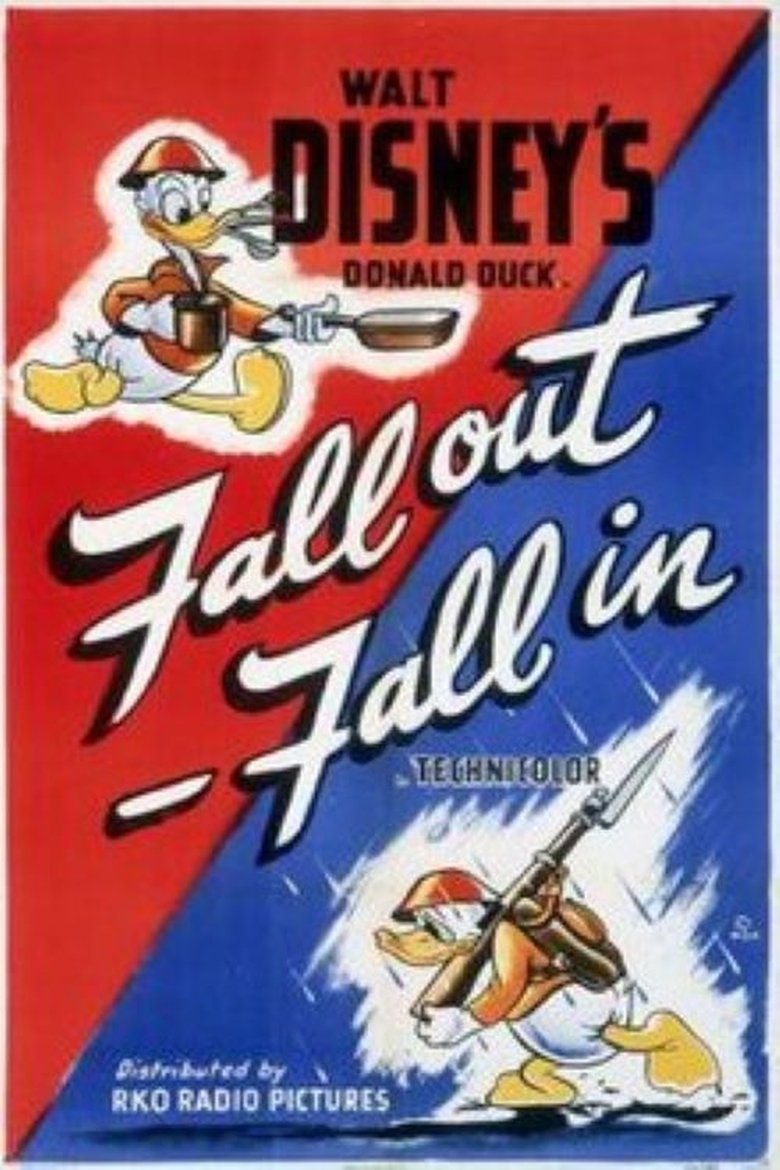
1943
NRDirector
Jack King
Runtime
7 minutes
Average Rating
No ratings yetSynopsis
Private Donald Duck is on a long, long training march, growing steadily more exhausted. Finally, they reach their camp location, and despite Donald's desire for dinner, he follows orders to pitch his tent first. He finally gives up on the tent as night falls. But as he tries to get to sleep, the loud shoring of the other soldiers forces him to bury his head. Finally, he gets to sleep, just as reveille sounds and the march continues.
Overall Score
Minimal
Category Breakdown
LGBTQ+ Representation
The film contains no discernible LGBTQ+ characters or themes. The narrative focuses strictly on a singular soldier's experience in a traditional military setting.
Gender Representation
The story adheres to 1940s gendered expectations by focusing on a male-centric military environment. There is no female presence to provide a lens for gender dynamics.
Racial & Ethnic Diversity
The cast consists of anthropomorphic characters within a homogeneous social framework. There is no evidence of non-white or non-Anglo-Saxon representation in this specific work.
Religious & Cultural Diversity
The film reinforces traditional Western institutional structures like military hierarchy. It promotes duty and endurance within a patriotic wartime framework rather than critiquing these institutions.
Disability Representation
There is no evidence of characters with visible or invisible disabilities. The protagonist's exhaustion is portrayed as a standard physiological response to labor.
Strengths
Areas for Improvement
AI Analysis
This 1943 short is a character-driven vignette centered on the physical comedy of military fatigue. It functions as a standard example of mid-century animation, prioritizing slapstick timing and character movement over social commentary. The narrative is cyclical and confined to a homogenous masculine space typical of wartime media. It lacks the structural complexity required for intersectional exploration, instead focusing on the universal experience of exhaustion. Ultimately, the film reflects the social constraints of its era. It does not attempt to challenge existing hierarchies or utilize identity politics, remaining a traditional piece of wartime entertainment.
1942
1939
1940
1938
1942
1943
1940
1938
1941
1940
1939

1941
No reviews yet. Be the first to share your thoughts on this movie!
Use the rating form above to leave a star rating and optional review.