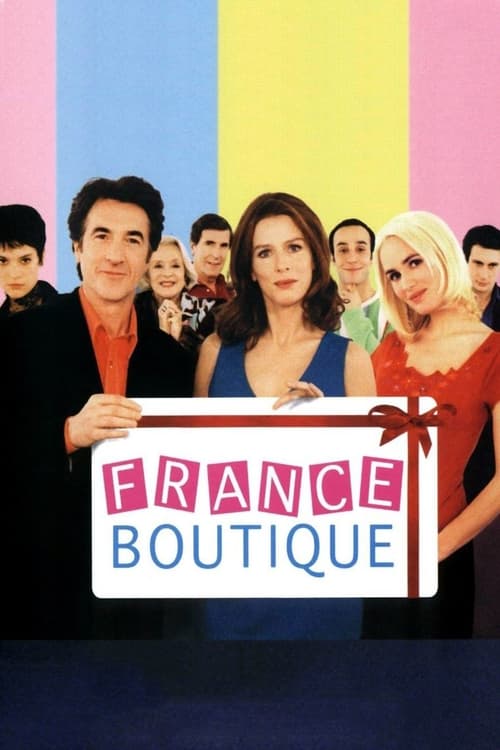
France Boutique
2003
No user ratings available yet
Representation score: 4.4 out of 10

Representation Score
Fair
1997
Director
Valérie Lemercier
Runtime
96 minutes
Average Rating
No ratings yetNew Showbiz Analysis
Valérie Lemercier’s comedy successfully centers on women's ability to drive the story, using a trio of professional women to propel the narrative forward against a disruptive male presence. This approach subverts traditional gender roles by placing women at the forefront of the story's conflicts. However, the film lacks substantial exploration of multi-layered themes, focusing mainly on class and professional status within a Western European context. Consequently, it offers a nuanced critique of certain social structures but remains confined to a particular social stratum.
Category Breakdown
The film does not include any characters with non-straight or non-cisgender identities, nor does it address issues related to LGBTQ+ communities.
The story centers around three women—an editor, an actress, and a journalist—who play key roles in driving the narrative. Their actions challenge traditional gender hierarchies by giving them significant influence over the plot.
The film primarily features a Parisian cast, with limited diversity. An American actor adds some cross-cultural tension, but the overall ensemble leans towards a Western European demographic.
The movie critiques societal norms through the contrast between American celebrity culture and French intellectual circles. It highlights the complexities of social hierarchies and institutions with a sophisticated, somewhat cynical perspective.
There are no characters in the film who deal with physical, sensory, or neurodivergent disabilities.
Present on Screen
Limited or Absent
Official Synopsis
Carl Herickson, a big American film star, unwillingly upsets a Parisian trio: a newspaper editor, his theater actress wife, and their fiery journalist best friend.
2003

1995

1997
1986
1994
1997

2013

2001
No reviews yet. Be the first to share your thoughts on this movie!
Use the rating form above to leave a star rating and optional review.