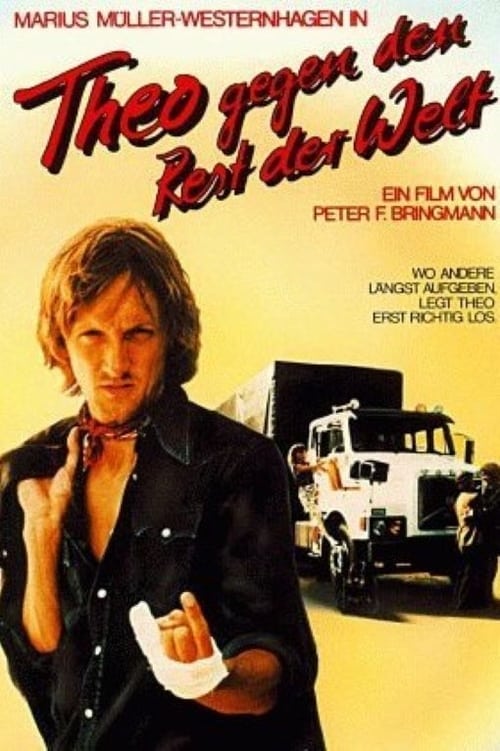
Theo Against the Rest of the World
1980
No user ratings available yet
Diversity score: 2.3 out of 10

1977
Director
Peter F. Bringmann
Runtime
117 minutes
Average Rating
No ratings yetSynopsis
Theo Gromberg is a bon vivant, apparently with built-in guarantee to failure. Faithful to his side is his friend Enno, an Italian guest workers. Both have a dream: to which they want to get into the trucking business its own trucks.
Overall Score
Fair
Category Breakdown
LGBTQ+ Representation
The film lacks explicit evidence of LGBTQ+ identities or non-heteronormative relationships. The narrative focus remains centered on the economic aspirations of the male protagonists.
Gender Representation
The story is built around a male-driven pursuit of entrepreneurship and a 'bon vivant' lifestyle. There is no indication of female characters possessing high agency or the subversion of gender hierarchies.
Racial & Ethnic Diversity
Meaningful inclusion is found in the character of Enno, an Italian guest worker. His role as a central protagonist highlights the immigrant experience and the integration of migrant labor.
Religious & Cultural Diversity
The film explores the pursuit of the middle-class dream through the trucking industry. It offers a nuanced view of capitalist mobility by focusing on the struggles of the working class.
Disability Representation
There is no information regarding characters with physical or neurodivergent disabilities within the narrative.
Strengths
Areas for Improvement
AI Analysis
Invitation to the Dance serves as a period-specific social comedy that highlights the precariousness of the working class. Its primary strength lies in its depiction of the migrant experience through the character of Enno, an Italian guest worker. This inclusion provides a more complex view of European society than was common in earlier cinema. However, the film is heavily skewed toward a male-centric perspective. The narrative architecture focuses almost exclusively on the entrepreneurial dreams of Theo and Enno, leaving little room for gender diversity or female agency. The lack of visible LGBTQ+ representation further limits the film's intersectional depth. Ultimately, while the film succeeds in disrupting homogeneous depictions of Western Europe via its ethnic representation, it remains a traditional, male-driven story in terms of its social dynamics.
1980
1999
2013

2006

1972
1977
1978

1975
2017
2026
1971
1972
No reviews yet. Be the first to share your thoughts on this movie!
Use the rating form above to leave a star rating and optional review.