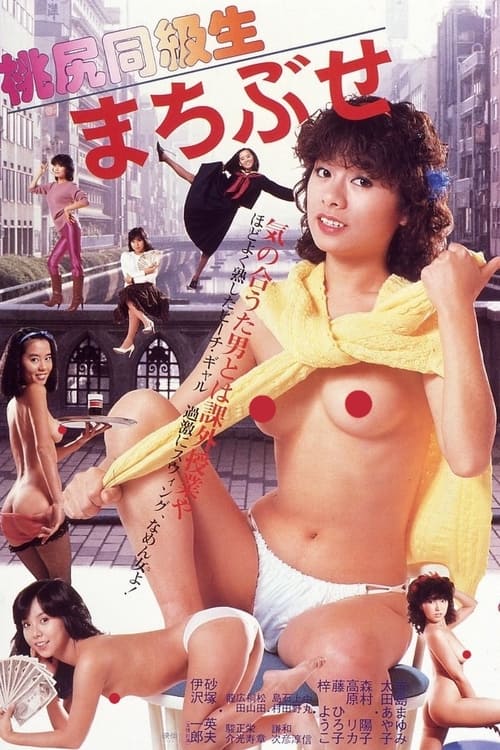
Pink Tush Girls: Slinking Classmates
1982
No user ratings available yet
Representation score: 7.2 out of 10
No Poster Available
Representation Score
Fair
1973
Director
Kōyū Ohara
Runtime
69 minutes
Average Rating
No ratings yetNew Showbiz Analysis
The film stands out for its era by giving female characters intellectual and investigative ability to act. Instead of being passive subjects, the women lead the inquiry into sexual social structures. However, the film remains culturally homogeneous and lacks explicit LGBTQ+ representation. It operates within the specific social and ethnic confines of 1970s Japan. Ultimately, the work provides a meaningful departure from patriarchal storytelling by using a female-led lens to deconstruct social taboos and underrepresented industries.
Category Breakdown
The film does not include any explicit LGBTQ+ characters or representations of non-straight relationships. The narrative explores sexual dynamics but does not provide visible queer ability to act.
Female protagonists Eiko, Yuki, and Midori drive the plot as investigators and innovators. By centering female intellect and proactive inquiry, the film challenges traditional gender hierarchies.
The production features a culturally homogeneous Japanese cast typical of its 1973 context. It avoids racial stereotyping but does not utilize diverse ethnic casting to challenge the status quo.
The story critiques social rigidity by investigating soaplands and banned media. It prioritizes subjective sexual exploration over conservative moral dictates, challenging mainstream institutional hierarchies.
There is no mention of characters with visible or invisible disabilities within the narrative.
Present on Screen
Limited or Absent
Official Synopsis
Kyotaro Tsugumo, a university professor and medical doctor, is the director of the Sexuality Research Institute. One day, a female college student, Eiko Tsugawa, visits Tsugumo to sell her "sex equation" that she has invented. A few days later, Eiko and her friends, Yuki and Midori, are asked by the editor-in-chief of a recently banned weekly magazine to investigate the actual situation of soaplands
1982
1973

1976

1974

2004
1983

1973

1988
No reviews yet. Be the first to share your thoughts on this movie!
Use the rating form above to leave a star rating and optional review.