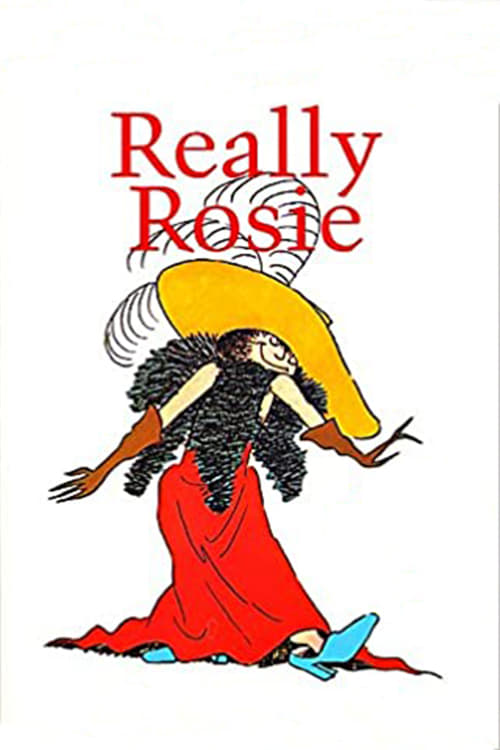
Really Rosie
1975
No user ratings available yet
Representation score: 3.9 out of 10

Representation Score
Minimal
1985
GDirector
Charles August Nichols
Runtime
30 minutes
Average Rating
No ratings yetNew Showbiz Analysis
Rose Petal Place: Real Friends opens with the familiar tension of a stage debut threatened by a rival, a premise that anchors the film in standard 1980s children’s animation. The camera loves Violet, positioning her as the virtuous protagonist whose kindness and preparation are the story’s moral core. Nastina, by contrast, is the hollow antagonist; her attempt to ruin the debut is not explored with nuance but framed as a simple moral failing that the narrative must correct. The film’s argument is straightforward: good behavior and friendship triumph over mischief and rivalry. There is no contradiction in this logic, but there is also no depth. The ending rewards Violet’s virtue, leaving Nastina’s actions as a cautionary tale rather than a complex character study. For a G-rated family fantasy, the film delivers exactly what it bills: a safe, traditional moral lesson where the good girl wins and the bad girl learns her place. It is a clean, unchallenging narrative that reinforces standard Western values without questioning them.
Category Breakdown
No queer characters or intimacy appear. The narrative relies on heterosexual or asexual childhood dynamics. Identity themes are entirely absent from the 1985 animated feature.
Female characters drive the plot but remain traditional. Violet is the virtuous protagonist; Nastina is the mischievous antagonist. Male voices serve supporting functions without subverting norms.
No on-screen racial or ethnic diversity exists. Characters are visually generic, reflecting the era’s homogeneous production standards. The cast consists of standard 1980s animation voices.
The film upholds conventional values like friendship and kindness. Nastina’s sabotage is framed as a moral failing. Standard Western notions of good versus bad behavior are reinforced.
No characters display physical, mental, or sensory disabilities. The narrative does not engage with impairment, accessibility, or neurodiversity in any visible way.
Present on Screen
Limited or Absent
Official Synopsis
Nastina is up to her old tricks and tries to ruin Violet's stage debut.
1975

1957
1993
1976
1961
2011

1981
2002
No reviews yet. Be the first to share your thoughts on this movie!
Use the rating form above to leave a star rating and optional review.