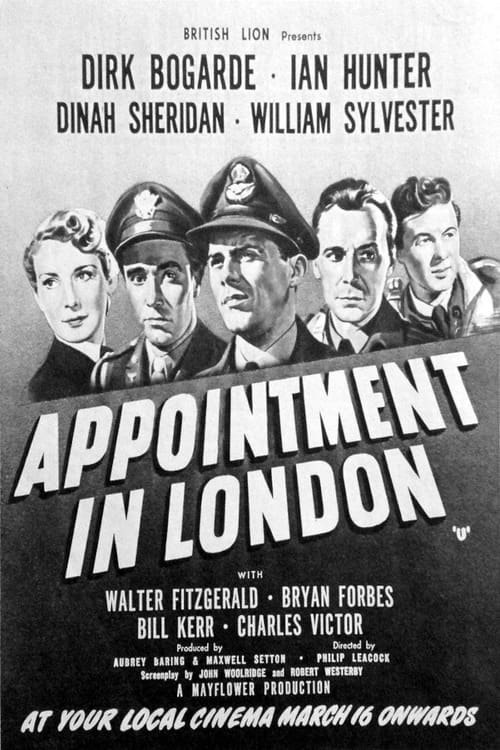
Appointment in London
1953
No user ratings available yet
Representation score: 0.4 out of 10

Representation Score
Minimal
1944
NRDirector
Mervyn LeRoy
Runtime
138 minutes
Average Rating
No ratings yetNew Showbiz Analysis
Thirty Seconds Over Tokyo is a classic wartime production aimed at boosting national resolve. It prioritizes military cohesion and the stability of the domestic sphere, reinforcing the social hierarchies of the 1940s. The film’s structure centers on a singular, homogeneous perspective, stabilizing and affirming existing institutional norms rather than challenging them. It highlights duty and the preservation of the social fabric. Ultimately, the narrative serves as a tool for nationalistic cohesion, emphasizing traditional masculine leadership and a Western-centric worldview.
Category Breakdown
The film does not include any representation of LGBTQ+ identities. The interpersonal relationships focus solely on traditional romantic pairings, such as the relationship between the male protagonist and his pregnant wife.
Men hold the majority of the ability to act in the film, particularly in military command and technical roles. Women are primarily portrayed as emotional anchors or domestic figures, lacking active roles in the main plot.
The cast and crew are predominantly white, reflecting the era's military depictions. The narrative maintains a singular, Western-centric viewpoint without exploring multicultural perspectives.
The story emphasizes Western institutional strength and patriotism. It upholds military discipline and the chain of command to achieve perceived moral objectives without questioning existing social structures.
There is no significant depiction of physical or neurodivergent disabilities. Characters are shown through a lens of idealized physical capability necessary for combat.
Present on Screen
Limited or Absent
Official Synopsis
In the wake of Pearl Harbor, a young lieutenant leaves his expectant wife to volunteer for a secret bombing mission which will take the war to the Japanese homeland.
1953

1959

1960

1961

1945

1955

1968
1976
No reviews yet. Be the first to share your thoughts on this movie!
Use the rating form above to leave a star rating and optional review.