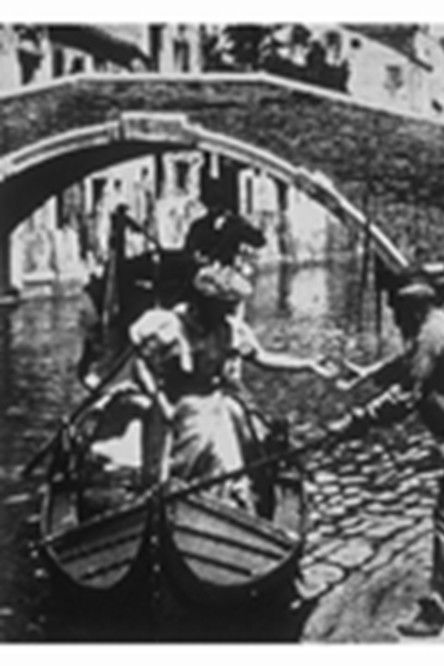
Venise, arrivée en gondole
1896
No user ratings available yet
Representation score: 2.0 out of 10
Representation Score
Limited
1896
Director
Charles Moisson
Runtime
1 minutes
Average Rating
No ratings yetNew Showbiz Analysis
As a brief documentary from 1896, this film primarily serves as a historical artifact of early observational cinema. It lacks the structural complexity or character development needed to address progressive or multi-layered themes. The content is limited to a single subject in a specific European setting. Given the early stage of filmmaking, the film does not offer intentional narrative subversion or social commentary. Ultimately, the work is a neutral observation of a moment in Venice rather than a vehicle for diverse representation.
Category Breakdown
The film does not include any same-sex relationships or characters with non-binary gender identities. It focuses on a brief, observational documentary without any LGBTQ narratives.
A woman is the main character, feeding pigeons alone in a public space. She holds a traditional role within the scene.
The film reflects the homogeneous demographics typical of late 19th-century European cities. There is no evidence of diverse casting or multicultural representation.
This is a neutral slice-of-life observation of a Western urban space. It lacks the complexity needed to address systemic oppression or specific cultural ideologies.
There are no characters with visible or invisible disabilities present in this historical footage.
Present on Screen
Limited or Absent
Official Synopsis
A woman feeds pigeons on the Piazza San Marco in Venice.
1896
1896
1896
1896
1896
1896
1896
1896
No reviews yet. Be the first to share your thoughts on this movie!
Use the rating form above to leave a star rating and optional review.