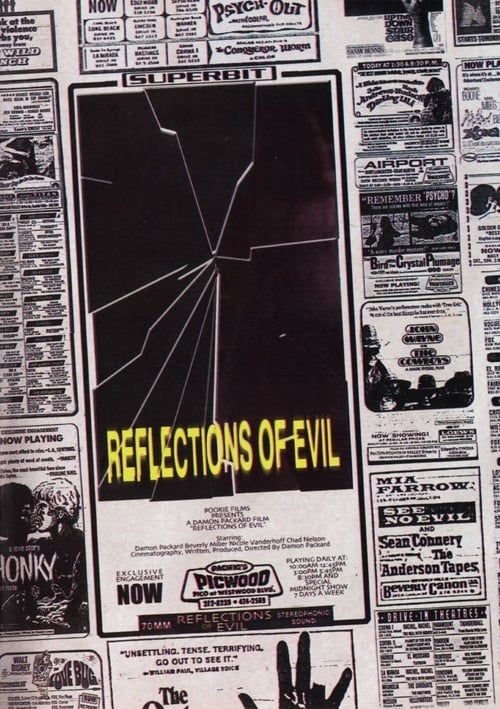
Reflections of Evil
2002
No user ratings available yet
Representation score: 6.0 out of 10

Representation Score
Excellent
1983
Director
Gerardo Pardo
Runtime
93 minutes
Average Rating
No ratings yetNew Showbiz Analysis
Deveras me Atrapaste successfully offers a culturally specific, non-Western perspective by grounding its drama in the social realities of Mexico City. It avoids typical Hollywood moralizing, using hallucinogenic experiences to explore character development and spiritual themes. However, the film leans on some conventional clichés, particularly regarding female vulnerability to urban vices. The romantic storyline remains strictly heterosexual, and the portrayal of psychological distress is ambiguous in terms of clinical representation.
Category Breakdown
The story focuses on a relationship between Aida and a supernatural entity called El Humo, which is centered around a heterosexual romance. There are no characters with LGBTQ+ identities or non-cisgender expressions.
Aida plays a significant role in driving the story through her psychological journey in a male-dominated urban environment. She shows strength but also vulnerability to drug use and sexual exploitation.
The film provides a localized perspective by focusing on Mexico City. It examines the tension between rural and urban identities within a Mexican context.
The narrative emphasizes personal, spiritual exploration rather than traditional religious morality. Drug use is presented as a means for psychological insight rather than a straightforward warning.
The film touches on psychological distress and troubled youth. However, it is unclear whether mental health issues are depicted as clinical conditions or simply used as narrative devices.
Present on Screen
Limited or Absent
Official Synopsis
Teen angst in Mexico City is made all the worse by a young provincial woman's infatuation for a ghost, in this effective drama about disturbed youth. Aida arrives in Mexico City and is immediately introduced into the world of drugs and sex by the friends she meets. Before long, she is having visions of the ghostly "El Humo" ("Smoke") and after she meets him at a party, they both are struck by Cupid's arrow. After some back-and-forth stepping around the nature of their relationship, El Humo disappears for five days, and Aida is distraught -- she locks herself up in her dark room, smokes some weed, takes a few hallucinogenic mushrooms, and then has a vision that clears up the mystery surrounding El Humo.
2002

1976

1993
1980

2004
2022

1988

1974
No reviews yet. Be the first to share your thoughts on this movie!
Use the rating form above to leave a star rating and optional review.