How to Play Football
1944
No user ratings available yet
Representation score: 3.4 out of 10
Representation Score
Minimal
1953
NRDirector
Jack Kinney
Runtime
7 minutes
Average Rating
No ratings yetNew Showbiz Analysis
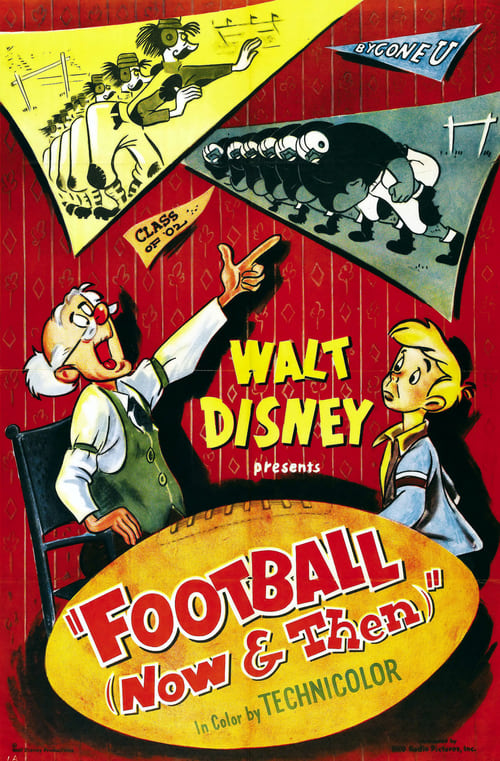
Football (Now and Then) is a period-specific animated short that prioritizes a generational and technological comparison over diverse representation. The narrative structure focuses on the tension between simplicity and modern specialization through a sporting metaphor. The film operates within the traditionalist frameworks of the early 1950s. It emphasizes nostalgia and the evolution of institutional scale rather than challenging social hierarchies or identity-based storytelling. Ultimately, the work functions as a comparative study of American sports culture. It relies on established social archetypes and physical humor typical of mid-century animation.
Category Breakdown
The film centers on a competitive football match between two eras. There is no representation of LGBTQ+ identities or narratives that address the assumption that everyone is straight or cisgender.
The story focuses on a grandfather and grandson, reinforcing a traditional patriarchal lineage. The football setting reinforces mid-century masculine archetypes of strength and competition.
The film likely reflects the homogeneous casting norms of 1953. There is no indication of diverse ethnic ensembles or intentional use of actors with different backgrounds.
The film explores the evolution of American institutions through a nostalgic lens. It utilizes a traditional family dynamic to frame the passage of time.
There is no evidence regarding the inclusion or depiction of characters with physical or neurodivergent disabilities.
Present on Screen
Limited or Absent
Official Synopsis
An old-timer tells his grandson that old-time football players could take a modern team, so we see a game with just that match-up: Bygone U. vs. Present State. More specifically, the Bygone U. team of 11 vs. Present State's dozens of special squads and support personnel. Even the stadium, fans, and press are modern vs. old-time. The game is close, and fiercely fought.
1944
1964
1946
1949
1955
1939
1932
1977
No reviews yet. Be the first to share your thoughts on this movie!
Use the rating form above to leave a star rating and optional review.