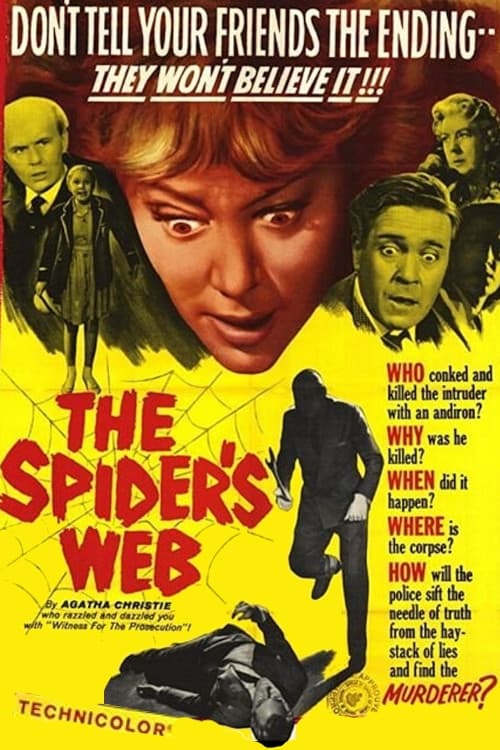
The Spider's Web
1960
No user ratings available yet
Representation score: 1.8 out of 10

Representation Score
Fair
1964
Director
Jacques Poitrenaud
Runtime
95 minutes
Average Rating
No ratings yetNew Showbiz Analysis
Trouble Among Widows provides a compelling exploration of gender roles and female autonomy within the context of 1960s French cinema. By presenting a widow's liberation through her husband's death, the film disrupts traditional domestic hierarchies and highlights female independence. However, the film remains confined within the social norms of its time. The absence of LGBTQ+, racial, and disability representation limits the film's scope to the societal norms of the era. Ultimately, the film serves as a critique of traditional marital structures while emphasizing individualistic morality, even though it does not offer broader diversity.
Category Breakdown
The film does not include any explicit depictions of LGBTQ+ identities or relationships that go beyond the assumption that everyone is straight. There is no evidence of romantic or sexual intimacy between the two widows.
Isabelle challenges traditional feminine stereotypes by seeing her husband's death as a relief rather than a tragedy. This shift in her role allows her to take a more active part in the story.
The film focuses on a single, homogeneous social group typical of 1964 French society. There is no indication of non-white actors or diverse racial backgrounds within the setting.
The story questions the sanctity of marriage by revealing the deceased husband's hidden life. It emphasizes individual skepticism and secular interests over traditional family values.
The narrative does not depict any visible or invisible disabilities. None of the characters are identified by neurodivergent traits or physical impairments that affect the plot.
Present on Screen
Limited or Absent
Official Synopsis
When Guillaume Valmont dies in a car accident, the only thing he leaves his wife Isabelle is his pharmacy. She never loved her older husband and she regards his death as a deliverance. At the funeral, she meets Judith, widow too, and she soon realises that her husband had been leading a double life. A short while later, the pharmacy is broken into, but nothing is stolen. Police Inspector Laforêt is put in charge of the case. Isabelle becomes suspicious when Judith offers to buy the pharmacy.
1960

1983
1978

2011

1944
1963
1959
1961
No reviews yet. Be the first to share your thoughts on this movie!
Use the rating form above to leave a star rating and optional review.