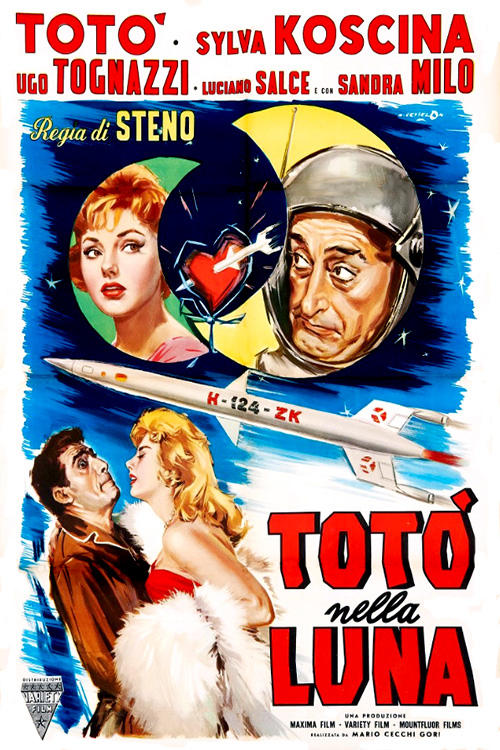
Totò in the Moon
1958
No user ratings available yet
Representation score: 1.2 out of 10
Representation Score
Limited
1965
Director
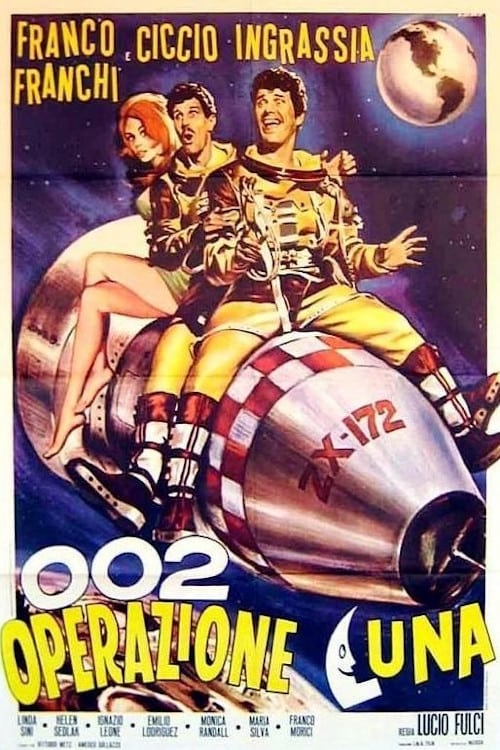
Lucio Fulci
Runtime
84 minutes
Average Rating
No ratings yetNew Showbiz Analysis
This mid-60s science fiction comedy operates within the conventional social frameworks of its time. The narrative is driven by Cold War anxieties and the Space Race, using political deception as a comedic engine rather than a tool for social deconstruction. While the film offers a satirical look at state institutions and propaganda, it does not extend this critique to broader social hierarchies. The character dynamics remain rooted in the period's standard demographic archetypes. Ultimately, the film serves as a genre-driven escapist piece. It prioritizes nationalistic tension and situational confusion over the representation of diverse identities or the subversion of systemic norms.
Category Breakdown
The film does not include any explicit LGBTQ+ characters or stories. It focuses on the deception involving astronauts' wives, which suggests a traditional framework where everyone is assumed to be straight.
Gender roles in the film are traditional, emphasizing the waiting wife cliché. The narrative stays within the established patriarchal structures of the 1960s without challenging these hierarchies.
The story centers on Cold War geopolitics and the conflict between Russia and Italy. It does not include any multi-layered racial or ethnic diversity, focusing instead on political affiliations.
The film satirizes state institutions such as the KGB through the lens of the Space Race. It prioritizes situational comedy and political escapism over deeper social critique.
There is no mention of visible or invisible disabilities within the character arcs or plot.
Present on Screen
Limited or Absent
Official Synopsis
KGB authorities abduct two criminals (Franco and Ciccio) who look exactly like missing spacemen and pretend they are the returning cosmonauts. They launch them in a rocket, so that they can land in public view, leading the populace to believe it was the original space craft that has returned. The two criminals look so much like the astronauts, they even fool the wives of the astronauts. Later however, the original spacecraft returns to Earth undamaged, and the plan goes all to pieces. In the end, Franco and Ciccio stay in Russia and the real astronauts relocate to Italy.
1958

1986
1953
1973
1966

1963
1946

1964
No reviews yet. Be the first to share your thoughts on this movie!
Use the rating form above to leave a star rating and optional review.