
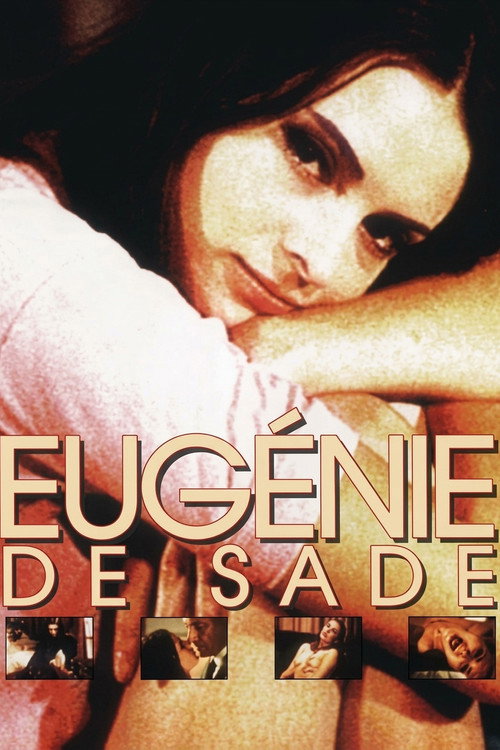
Eugenie
1970
No user ratings available yet
Representation score: 5.1 out of 10
Representation Score
Fair
1973
XDirector
Jesús Franco
Runtime
91 minutes
Average Rating
No ratings yetNew Showbiz Analysis
Eugénie de Sade is a film that challenges traditional gender norms while falling short in providing meaningful LGBTQ+ or racial representation. By focusing on the protagonist's sexual autonomy, it avoids the usual portrayal of passive female characters in historical dramas. However, the film remains firmly set in an 18th-century European context, offering limited ethnic diversity. Through a modern lens, it questions religious and social norms but stays within a straight-centered framework. Ultimately, the film emphasizes individual liberation and psychological exploration over broader social inclusivity.
Category Breakdown
The film explores power dynamics between the protagonist and her stepfather, focusing on straight-centered relationships. It does not include explicit representations of LGBTQ+ identities or subplots.
Eugénie is portrayed as an active force in the story, pursuing sexual autonomy. The film challenges traditional gender roles by emphasizing female desire rather than passive female characters.
The cast is ethnically uniform, reflecting the 18th-century French setting. There are no attempts to diversify the cast or the aristocratic environment.
The narrative questions traditional Christian morality, presenting subjective ethical standards. It dismantles conventional social institutions to frame transgressive actions as personal discovery.
There are no visible depictions of physical or cognitive disabilities that play a central role in the story or drive the narrative.
Present on Screen
Limited or Absent
Official Synopsis
Eugenie, a beautiful but shy young girl, lives with her stepfather, a famous writer specializing in stories of erotica. One day she happens to read one of his "erotic" books and its power so affects her that begins to find herself sexually attracted to her stepfather. He notices this, and eventually brings her into his dark world of sexual perversion and murder.
1970
1977

1993

1976
1981

2005
1972
1974
No reviews yet. Be the first to share your thoughts on this movie!
Use the rating form above to leave a star rating and optional review.