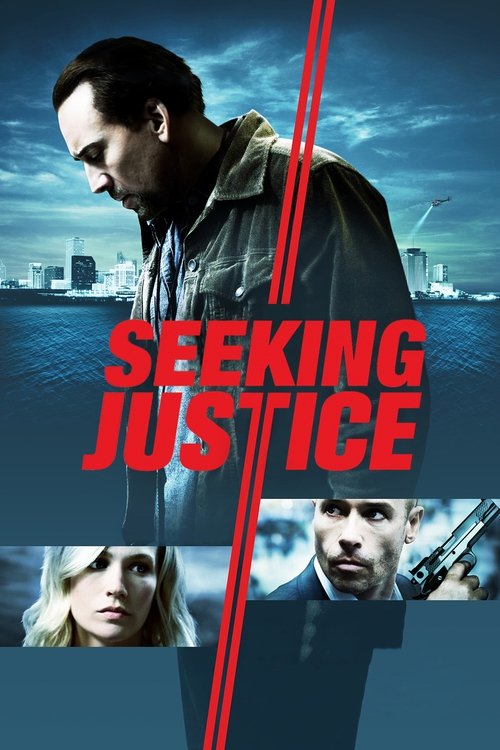
Seeking Justice
2011
No user ratings available yet
Diversity score: 4.8 out of 10

2021
RRuntime
110 minutes
Average Rating
No ratings yetSynopsis
A man vows to bring justice to those responsible for his wife's death while protecting the only family he has left, his daughter.
Overall Score
Fair
Category Breakdown
LGBTQ+ Representation
The film anchors its emotional core in a strictly heterosexual marriage, leaving no narrative space for queer identities. This conventional framing reflects standard genre expectations without actively challenging heteronormative baselines.
Gender Representation
Male protagonist Ray drives the plot through protective violence, while female characters function primarily as emotional catalysts. The narrative reinforces traditional action-hero tropes rather than subverting established patriarchal frameworks.
Racial & Ethnic Diversity
A multi-ethnic ensemble anchors the lead roles, effectively normalizing diverse faces in a mainstream action thriller. This casting disrupts historical exclusion patterns by granting characters of color full narrative ownership.
Religious & Cultural Diversity
The story sharply critiques institutional capitalism and law enforcement, framing corporate greed as the true antagonist. By justifying extralegal retribution against compromised structures, the film actively questions traditional power hierarchies.
Disability Representation
Chronic illness operates strictly as a plot device to trigger the protagonist’s external conflict rather than exploring lived experiences. The narrative avoids meaningful disability representation, keeping the condition purely utilitarian.
Strengths
Areas for Improvement
AI Analysis
Sweet Girl leverages a visually diverse ensemble to disrupt the historically white archetype of the action protagonist, yet it struggles to translate that casting into substantive intersectional storytelling. The multi-ethnic lead cast commands the screen, but the script treats their backgrounds as aesthetic choices rather than narrative drivers. Gender dynamics remain firmly entrenched in traditional action-hero tropes, with male competence validated through extralegal force and female agency relegated to reactive survival. Chronic illness functions purely as a mechanical trigger for the plot, stripping the narrative of deeper explorations into patient experience or systemic healthcare critique. Ultimately, the film succeeds in centering characters of color and mounting a sharp critique of institutional corruption. However, its reliance on heteronormative family structures and utilitarian disability framing prevents it from achieving a truly progressive impact, resulting in a moderate overall diversity score.
2011

2017

2019

2009

2016

2019
2017

2009

2007

2010

2011

2016
No reviews yet. Be the first to share your thoughts on this movie!
Use the rating form above to leave a star rating and optional review.