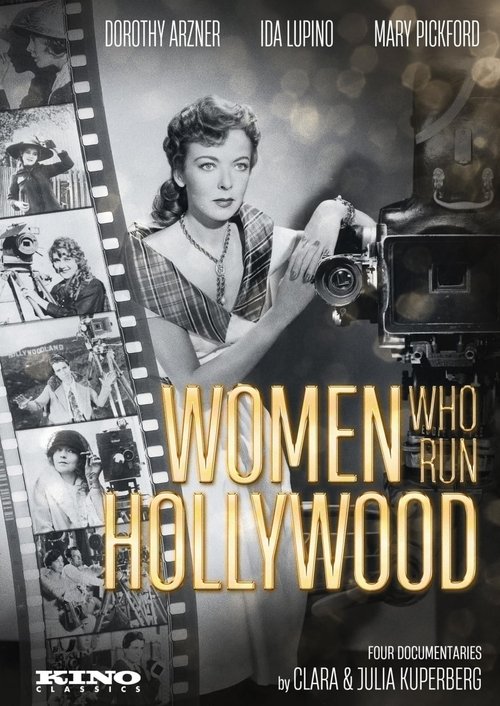
The Women Who Run Hollywood
2016
No user ratings available yet
Representation score: 6.3 out of 10
Representation Score
Good
2019
Director
Rob Garver
Runtime
98 minutes
Average Rating
No ratings yetNew Showbiz Analysis
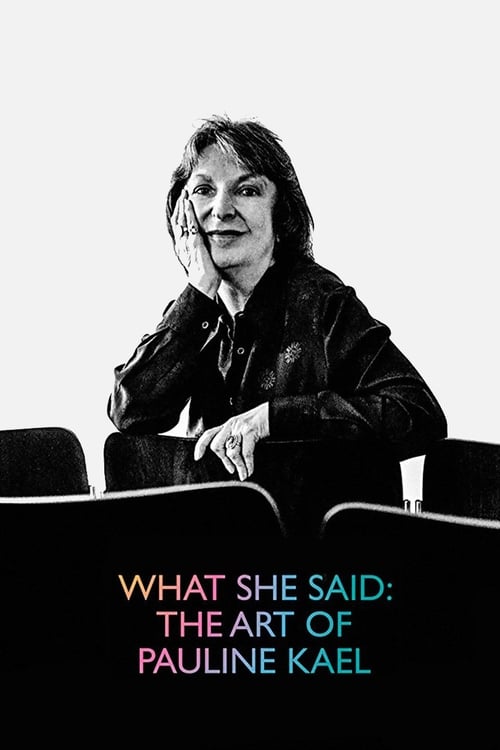
This documentary excels in showcasing the professional ability to act of Pauline Kael, highlighting her disruption of patriarchal intellectual hierarchies. By centering a woman who actively resisted sexism, the film challenges the traditional male dominance in critical expertise. However, the film's narrow focus limits its scope regarding other identities. It does not engage deeply with LGBTQ+ narratives or prioritize racial and ethnic diversity, reflecting the cultural context of the time period. Overall, the work serves as a postmodern exploration of subjective experience. It prioritizes a deep dive into an individual's impact over broad social representation.
Category Breakdown
The documentary does not explicitly depict non-binary gender identities or queer stories. It avoids negative stereotypes but does not center on LGBTQ+ narratives.
The film focuses on a woman who held significant intellectual authority in a male-dominated field. It highlights her active resistance to sexism and her strong role in challenging gender norms.
The film reflects the social constraints of the mid-20th century. It does not emphasize racial or ethnic diversity as a main theme.
The documentary celebrates personal perspectives and questions the idea of absolute truth. It prioritizes individual viewpoints over traditional institutions and established authorities.
The film does not focus on disability, neurodivergence, or physical impairments. It remains neutral, concentrating on intellectual and professional history.
Present on Screen
Limited or Absent
Official Synopsis
Pauline Kael (1919–2001) was undoubtedly one of the greatest names in film criticism. A Californian native, she wrote her first review in 1953 and joined ‘The New Yorker’ in 1968. Praised for her highly opinionated and feisty writing style and criticised for her subjective and sometimes ruthless reviews, Kael’s writing was refreshingly and intensely rooted in her experience of watching a film as a member of the audience. Loved and hated in equal measure – loved by other critics for whom she was immensely influential, and hated by filmmakers whose films she trashed - Kael destroyed films that have since become classics such as The Sound of Music and raved about others such as Bonnie and Clyde. She was also aware of the perennial difficulties for women working in the movies and in film criticism, and fiercely fought sexism, both in her reviews and in her media appearances.
2016

2018
2018
2000
2006
2011

2025

2019
No reviews yet. Be the first to share your thoughts on this movie!
Use the rating form above to leave a star rating and optional review.