Thank Your Lucky Stars
1943
No user ratings available yet
Representation score: 0.8 out of 10
Representation Score
Limited
1944
ApprovedDirector
A. Edward Sutherland
Runtime
122 minutes
Average Rating
No ratings yetNew Showbiz Analysis
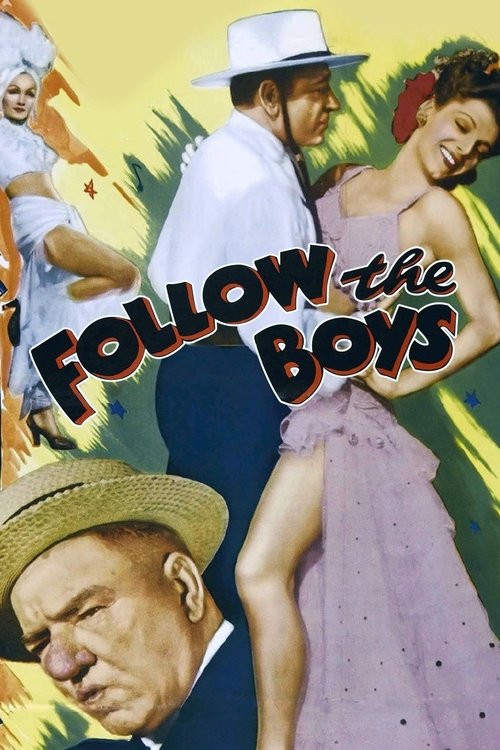
Follow the Boys serves as a quintessential wartime morale-booster, using a star-studded ensemble to reinforce national identity rather than challenge it. The film adheres strictly to the social hierarchies and studio formulas of 1944, prioritizing cultural stability and patriotic unity. The production lacks complexity, focusing on a homogeneous cast and traditional gender roles. By centering the narrative on a boys' academy and male authority, it maintains a conventional patriarchal structure common to the era.
Category Breakdown
The film focuses on heterosexual relationships typical of the 1940s. There is no representation of non-traditional gender identities or narratives that question traditional norms.
Set in a boys' academy, the film emphasizes traditional patriarchal hierarchies. While female stars like Marlene Dietrich appear in musical numbers, the central plot revolves around male figures.
The cast is predominantly white, reflecting the era's lack of racial integration in mainstream Hollywood. There is no a significant role in driving the story for non-white characters within the main ensemble.
The film promotes traditional Western social cohesion and wartime unity. It serves as a patriotic morale-booster that supports the stability of existing social institutions.
There is no representation of visible or invisible disabilities. Characters are portrayed as idealized, able-bodied performers typical of the musical comedy genre.
Present on Screen
Limited or Absent
Official Synopsis
During World War II, all the studios put out "all-star" vehicles which featured virtually every star on the lot--often playing themselves--in musical numbers and comedy skits, and were meant as morale-boosters to both the troops overseas and the civilians at home. This was Universal Pictures' effort. It features everyone from Donald O'Connor to the Andrews Sisters to Orson Welles to W.C. Fields to George Raft to Marlene Dietrich, and dozens of other Universal players.
1943
1945
1944
1959
1943
1944
1942
1991
No reviews yet. Be the first to share your thoughts on this movie!
Use the rating form above to leave a star rating and optional review.