
Bienvenido Paisano
2006
No user ratings available yet
Representation score: 4.1 out of 10
Representation Score
Good
2012
Director
Antonio Méndez Esparza
Runtime
110 minutes
Average Rating
No ratings yetNew Showbiz Analysis
Antonio Méndez Esparza presents a grounded, humanist portrayal of migrant life that steers clear of mainstream commercial clichés. The film succeeds by offering a culturally specific reality that avoids stereotypes and presents authentic identities. The film's strength lies in its authentic ethnic representation and its nuanced exploration of the psychological and physical pressures of migration. It also offers a sophisticated portrayal of male vulnerability and shifting socioeconomic roles. However, the film remains limited by its focus on traditional family structures and a lack of visible LGBTQ+ identities or non-traditional gender expressions.
Category Breakdown
The story focuses on a traditional family structure with a husband, wife, and daughters. Queer identities and non-traditional gender expressions are not depicted explicitly.
The film challenges traditional gender roles by highlighting the emotional labor of female characters and exploring male vulnerability through Pedro's struggles.
The film centers on a Mexican cast in rural Guerrero, avoiding an outsider's perspective and treating ethnicity as an intrinsic part of identity.
The narrative critiques systemic pressures that cause migration. It portrays the United States as a disruptive force that uproots traditional family stability and cultural practices.
There are no prominent depictions of visible or invisible disabilities that play central roles in the narrative.
Present on Screen
Limited or Absent
Official Synopsis
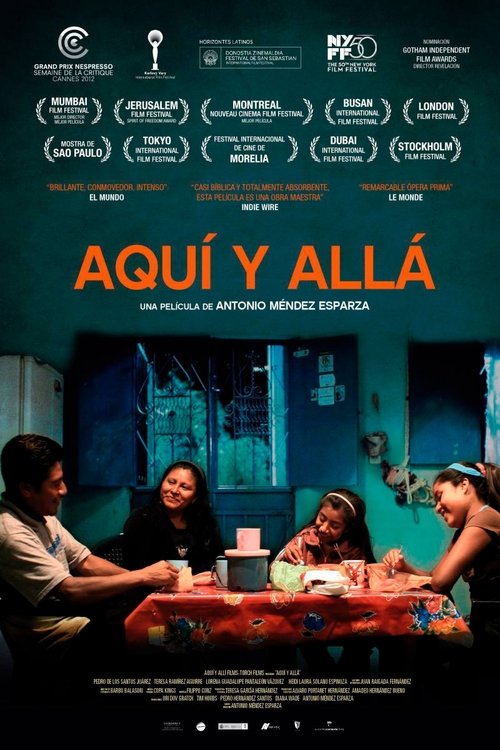
Pedro returns home to a small mountain village in Guerrero, Mexico after years of working in the US. He finds his daughters older, and more distant than he imagined. His wife still has the same smile. Having saved some earnings from two trips to the US, he hopes to now finally make a better life with his family, and even to pursue his dreams on the side by starting a band: Copa Kings. He cherishes the everyday moments with his family. The villagers think this year's crop will be bountiful. There is also good work in a growing city an hour away. But the locals are wise to a life of insecurity, and their thoughts are often of family members or opportunities far away, north of the border. While working in the fields, Pedro meets and begins to mentor a teenager who dreams of the US. That place somehow always feels very present, practically knocking at the door. "Aquí y Allá" is a story about hope, and the memories and loss of what we leave behind.
2006

2007

2019

2013

2014

2013

2012

2011
No reviews yet. Be the first to share your thoughts on this movie!
Use the rating form above to leave a star rating and optional review.