
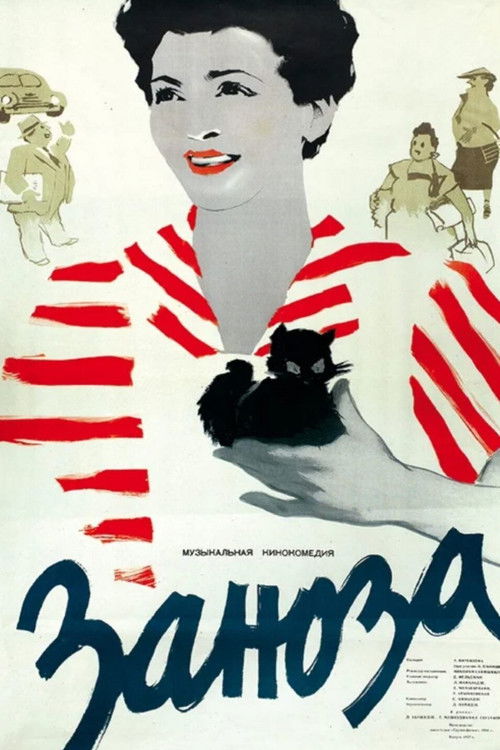
Chrichina
1954
No user ratings available yet
Representation score: 3.6 out of 10
Representation Score
Fair
1956
Director
Nikoloz Sanishvili
Runtime
80 minutes
Average Rating
No ratings yetNew Showbiz Analysis
The Scrapper offers a nuanced look at social mobility and gender roles through its protagonist, Lia. By placing a woman in a professional role typically reserved for men, the film provides a moderate disruption of 1950s gender norms. However, the film remains tied to the romantic conventions of its era. The narrative focuses on a standard heterosexual romance, which limits its impact regarding broader identity representation. Ultimately, the film's strength lies in its subtle critique of class structures. It uses the tension between social status and personal desire to drive its comedic and romantic elements.
Category Breakdown
The film follows a traditional romantic arc between a male architect and a female driver. There is no indication of non-straight relationships or same-sex intimacy within the narrative.
Lia serves as a central protagonist who challenges mid-century gender roles by working as a driver. Her active role and pursuit of a relationship across social boundaries challenge expected female submissiveness.
The production reflects the regional demographics of 1950s Georgia. Without specific casting details, the film appears to function within its own cultural context.
The story explores social stratification and the tension between different classes. While it critiques rigid hierarchies, it remains largely within the bounds of traditional romantic comedy clichés.
There is no mention of characters with visible or invisible disabilities in the narrative. As such, no representation is present in this category.
Present on Screen
Limited or Absent
Official Synopsis
Fed up with caprices of her employer's wife, Lia becomes a driver of architect Giorgi. Soon she falls in love with him, but different social status is an obstacle for their relationship.
1954

1962

1978

1952

1966
1967

1977

1959
No reviews yet. Be the first to share your thoughts on this movie!
Use the rating form above to leave a star rating and optional review.