Rai
1995
No user ratings available yet
Representation score: 3.8 out of 10
Representation Score
Fair
1995
NRDirector
Mathieu Kassovitz
Runtime
98 minutes
Average Rating
No ratings yetNew Showbiz Analysis
La Haine is a powerful work of social realism that centers the lived realities of underrepresented populations on the periphery of French society. It succeeds by dismantling traditional nationalistic narratives through a diverse, multi-layered lens. While the film achieves exceptional depth in racial and cultural representation, it remains narrow in its gender dynamics. The focus on hyper-masculinity leaves little room for female influence or LGBTQ+ perspectives. Ultimately, the film's strength lies in its ability to critique systemic power and institutional oppression, using its central characters to drive a tension-filled exploration of identity and state authority.
Category Breakdown
The film focuses almost exclusively on hyper-masculine social bonds. There is a notable absence of queer narratives or non-straight relationships.
The narrative operates within a heavily male-centric framework. Women are largely absent from the central plot, resulting in a lack of female influence or control.
The film excels by casting a Black, Arab, and White trio as a cohesive unit. This disrupts monolithic portrayals of French identity and explores the lasting impacts of historical colonization.
The story provides a profound critique of Western institutions and the capitalist divide. It frames anti-social behaviors as systemic responses to socioeconomic exclusion.
The film does not feature prominent characters with visible or invisible disabilities.
Present on Screen
Limited or Absent
Official Synopsis
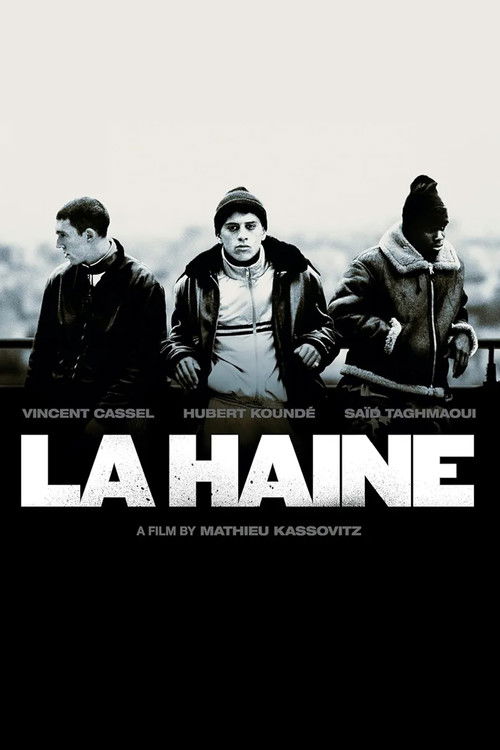
After a chaotic night of rioting in a marginal suburb of Paris, three young friends, Vinz, Hubert and Saïd, wander around unoccupied waiting for news about the state of health of a mutual friend who has been seriously injured when confronting the police.
1995

1994

2019
1980

1992

1989
1995

2003
No reviews yet. Be the first to share your thoughts on this movie!
Use the rating form above to leave a star rating and optional review.