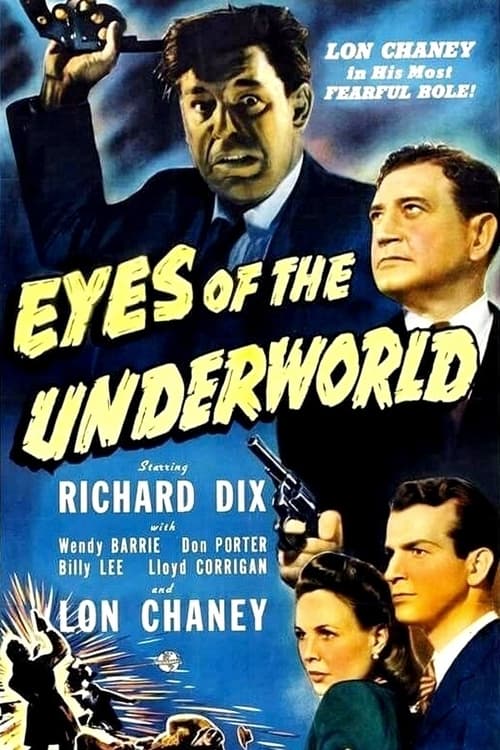
Eyes of the Underworld
1942
No user ratings available yet
Representation score: 0.8 out of 10
Representation Score
Minimal
1940
ApprovedDirector
Harry Lachman
Runtime
72 minutes
Average Rating
No ratings yetNew Showbiz Analysis
Harry Lachman’s crime drama is a classic example of its time, focusing on atmospheric suspense rather than social complexity. The film adheres to the traditional power dynamics of 1940s Britain. The narrative lacks diversity, presenting a culturally uniform environment where established norms remain unchallenged. It does not explore non-traditional perspectives or underrepresented identities. Overall, the film reflects the social constraints of its era, offering limited representation for diverse identities.
Category Breakdown
The film does not depict any non-binary gender identities or sexual orientations. It follows the traditional gender norms typical of 1940s British cinema.
Male characters dominate the plot through leadership and physical strength. Female characters are confined to domestic roles or positions requiring protection, reinforcing traditional gender hierarchies.
The cast is primarily white, reflecting the homogeneous demographics of mid-century Britain. There are no characters from diverse racial backgrounds.
The story revolves around stable community structures. It portrays disruptions to family and religious institutions as sources of tension without critiquing them.
Characters with visible or invisible disabilities are not given significant roles. The narrative does not address neurodivergence or physical disabilities as central themes.
Present on Screen
Limited or Absent
Official Synopsis
A man is blackmailed into taking his brother's place in a gang for a jewellery heist.
1942
1950
1931
1949

1954
1954
1941
1941
No reviews yet. Be the first to share your thoughts on this movie!
Use the rating form above to leave a star rating and optional review.