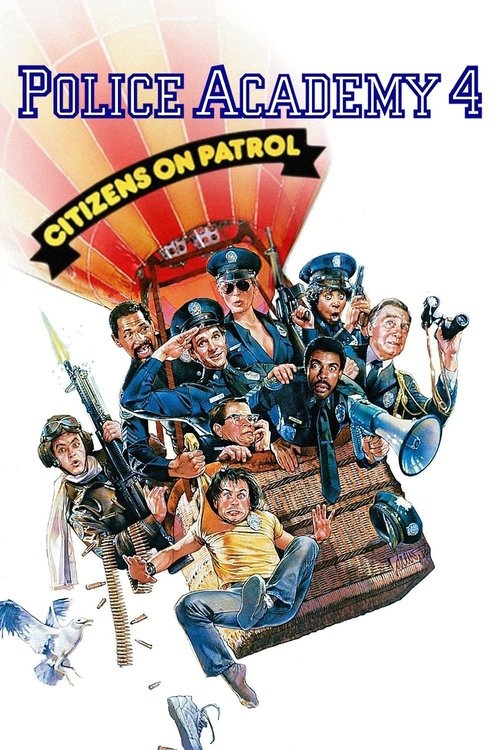
Police Academy 4: Citizens on Patrol
1987
No user ratings available yet
Representation score: 2.6 out of 10

Representation Score
Good
1984
RDirector
Hugh Wilson
Runtime
97 minutes
Average Rating
No ratings yetNew Showbiz Analysis
Police Academy serves as a transitional text that disrupts the homogeneous 'tough cop' cliché of the 1980s. By utilizing a melting pot casting strategy, the film moves away from the standard imagery of law enforcement procedurals through its diverse ensemble. While the film succeeds in racial and ethnic inclusion, it remains anchored in the slapstick conventions of its era. It lacks deep exploration of multiple aspects of diversity and fails to engage with LGBTQ+ identities or disability as meaningful narrative elements. Ultimately, the film's strength lies in its comedic subversion of institutional hierarchy, even as it remains a largely male-centric comedy.
Category Breakdown
The film operates within a conventional framework that assumes everyone is straight or cisgender. It lacks any visible LGBTQ+ characters or explorations of non-straight identities.
Female recruits like Laverne challenge traditional hierarchies by using wit instead of physical dominance. While the narrative remains male-centric, it subverts the stoic male officer archetype through absurdity.
A multi-ethnic ensemble avoids the monolithic white standard of the genre. Characters like Hightower play a significant role in driving the story and play central roles in the group's collective identity.
The film deconstructs Western institutional authority by portraying rigid disciplinary structures as farcical. However, protagonists ultimately find social integration through adherence to the law.
Representation is minimal. The film uses 'misfit' clichés for comedic characterization rather than exploring neurodivergence or physical disability as primary narrative elements.
Present on Screen
Limited or Absent
Official Synopsis
New rules enforced by the Lady Mayoress mean that sex, weight, height and intelligence need no longer be a factor for joining the Police Force. This opens the floodgates for all and sundry to enter the Police Academy, much to the chagrin of the instructors. Not everyone is there through choice, though. Social misfit Mahoney has been forced to sign up as the only alternative to a jail sentence and it doesn't take long before he falls foul of the boorish Lieutenant Harris. But before long, Mahoney realises that he is enjoying being a police cadet and decides he wants to stay... while Harris decides he wants Mahoney out!
1987
1985
1986
1988

1989

1982
1991
1969
No reviews yet. Be the first to share your thoughts on this movie!
Use the rating form above to leave a star rating and optional review.