
I Am Sam
2001
No user ratings available yet
Representation score: 5.7 out of 10
Representation Score
Limited
1988
RDirector
Barry Levinson
Runtime
134 minutes
Average Rating
No ratings yetNew Showbiz Analysis
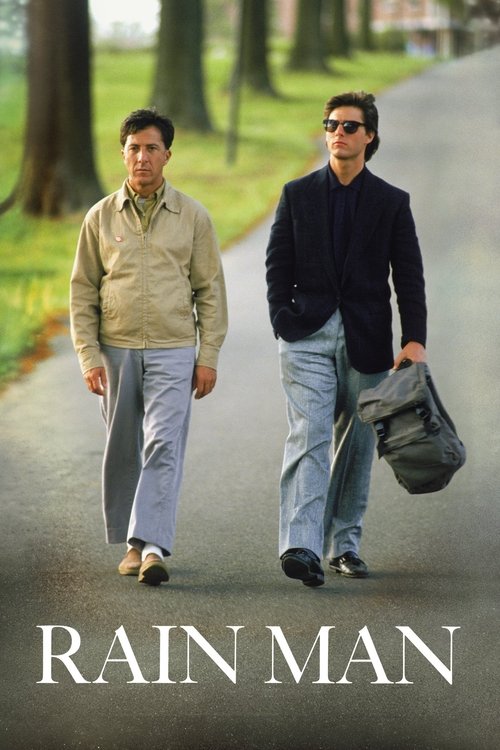
Rain Man is a character-driven drama centered around a specific, traditional demographic. While it gained historical significance by bringing autism into the mainstream, the film's structure remains narrow. The narrative heavily relies on a male-centric, homogeneous perspective, limiting the film's exploration of diverse identities. Ultimately, the film primarily serves as a study of a neurotypical man's redemption rather than a multifaceted exploration of diverse lived experiences.
Category Breakdown
The film does not include any LGBTQ+ characters or non-cisgender identities. It focuses solely on a male-centric family dynamic within a straight-centered context.
The story emphasizes a traditional masculine relationship between two men. Female characters are underrepresented and lack significant roles in driving the plot.
The cast is predominantly white, reflecting the film's 1988 setting. There is no significant effort to include diverse casting or multicultural perspectives.
The film examines a shift from predatory capitalism to empathy. While it critiques greed, it adheres to a conventional Western dramatic structure.
Raymond's portrayal of neurodivergence is highly visible. However, the narrative often uses his autism to facilitate the neurotypical protagonist's emotional journey.
Present on Screen
Limited or Absent
Official Synopsis
When car dealer Charlie Babbitt learns that his estranged father has died, he returns home to Cincinnati, where he discovers that he has a savant older brother named Raymond and that his father's $3 million fortune is being left to the mental institution in which Raymond lives. Motivated by his father's money, Charlie checks Raymond out of the facility in order to return with him to Los Angeles. The brothers' cross-country trip ends up changing both their lives.
2001

1962
1999

1992

1997

2011

1996

2018
No reviews yet. Be the first to share your thoughts on this movie!
Use the rating form above to leave a star rating and optional review.