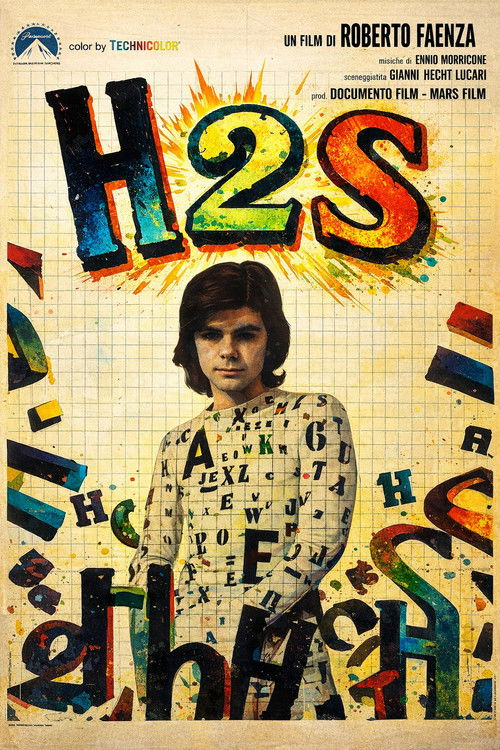
H2S
1969
No user ratings available yet
Diversity score: 5.1 out of 10

1965
Director
Andy Warhol
Runtime
70 minutes
Average Rating
No ratings yetSynopsis
Andy Warhol’s screen adaptation of Burgess's "A Clockwork Orange”.
Overall Score
Good
Category Breakdown
LGBTQ+ Representation
The film serves as a visual record of the New York avant-garde, centering queer and non-cisnormative identities. It disrupts mainstream expectations by documenting these figures in an unmediated, central capacity.
Gender Representation
Women are presented as autonomous subjects rather than domestic archetypes. However, the lack of structured narrative prevents the exploration of active agency or the subversion of gender hierarchies through plot.
Racial & Ethnic Diversity
The cast reflects the specific Bohemian subcultures of the 1960s New York underground. While it avoids mainstream whitewashing, it lacks broad intersectional breadth beyond these specialized circles.
Religious & Cultural Diversity
The work challenges traditional Western institutions by rejecting standard moral requirements and heroism. It prioritizes subjective truth and individual existence over capitalist narrative structures and societal conformity.
Disability Representation
The experimental nature of the film provides no evidence regarding the representation of neurodivergent or physical disabilities. No characters are documented as being used as plot devices.
Strengths
Areas for Improvement
AI Analysis
Andy Warhol’s *Vinyl* functions as a postmodern deconstruction of cinema rather than a traditional narrative. By eschewing scripted plots and character arcs, the film moves away from standard metrics of agency, instead offering a raw, observational look at the 1960s underground. The film's strength lies in its refusal to participate in ordered Western storytelling. It provides a space where identity is presented as an unmediated state of being, effectively disrupting the social and cinematic hierarchies of 1965. While the work excels at capturing the non-conformist spirit of the avant-garde, it lacks the narrative machinery to demonstrate specific character-driven agency or broad intersectional diversity.
1969
1963
1973
1964

1981
1977
1970

1938
1964

1975
1959
1974
No reviews yet. Be the first to share your thoughts on this movie!
Use the rating form above to leave a star rating and optional review.