Morning Mist
1980
No user ratings available yet
Representation score: 3.5 out of 10
Representation Score
Fair
1969
Director
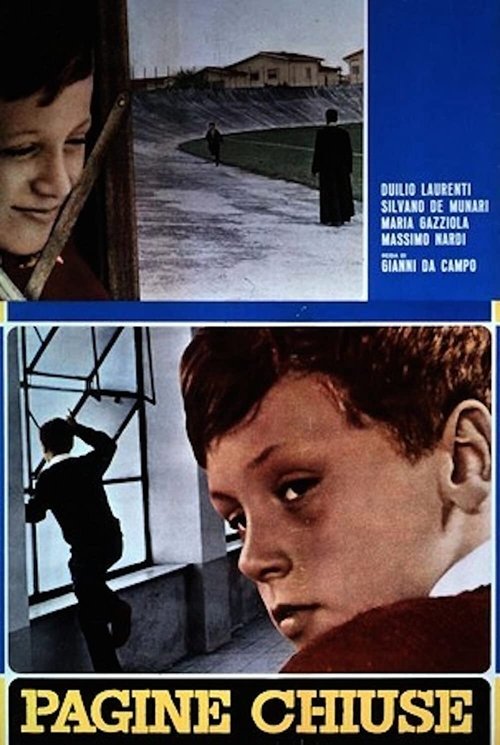
Gianni Da Campo
Runtime
83 minutes
Average Rating
No ratings yetNew Showbiz Analysis
Closed Pages is a period drama that primarily serves as a critique of institutional power. It excels in deconstructing the moral frameworks of mid-century Catholic education and the traditional family unit. The narrative highlights the tension between individual ability to act and rigid social structures through the protagonist's struggles. However, the film lacks depth in terms of diversity. The focus on a singular, homogeneous social setting results in limited racial and ethnic diversity. Additionally, the absence of prominent female characters or confirmed LGBTQ+ identities narrows the scope of its social commentary. Overall, while the film effectively challenges cultural hierarchies, it remains a narrow examination of a specific, traditional demographic.
Category Breakdown
The film does not include any confirmed LGBTQ+ characters or same-sex relationships. Although there is potential for subtext, no explicit LGBTQ+ elements are present.
The story focuses on a male protagonist who challenges patriarchal religious hierarchies. Female characters are not prominently featured, keeping the narrative centered on male-driven conflicts within institutions.
The setting appears localized and homogeneous, reflecting the era's dramatic realism. There is no indication of a multi-ethnic cast or diverse racial representation.
The film critiques traditional Western institutions by questioning the sanctity of family and religious authority. It emphasizes individual experience over strict Catholic doctrine.
There is no information available regarding the depiction of physical or neurodivergent disabilities in this work.
Present on Screen
Limited or Absent
Official Synopsis
Luciano is forced to enter a religious boarding school after his parents' split-up. He faces hard time in the new environment under strict Catholic education.
1980
1967
1977
2014
1951
1968
2013
2011
No reviews yet. Be the first to share your thoughts on this movie!
Use the rating form above to leave a star rating and optional review.