
The Commandant
1963
No user ratings available yet
Diversity score: 2.7 out of 10
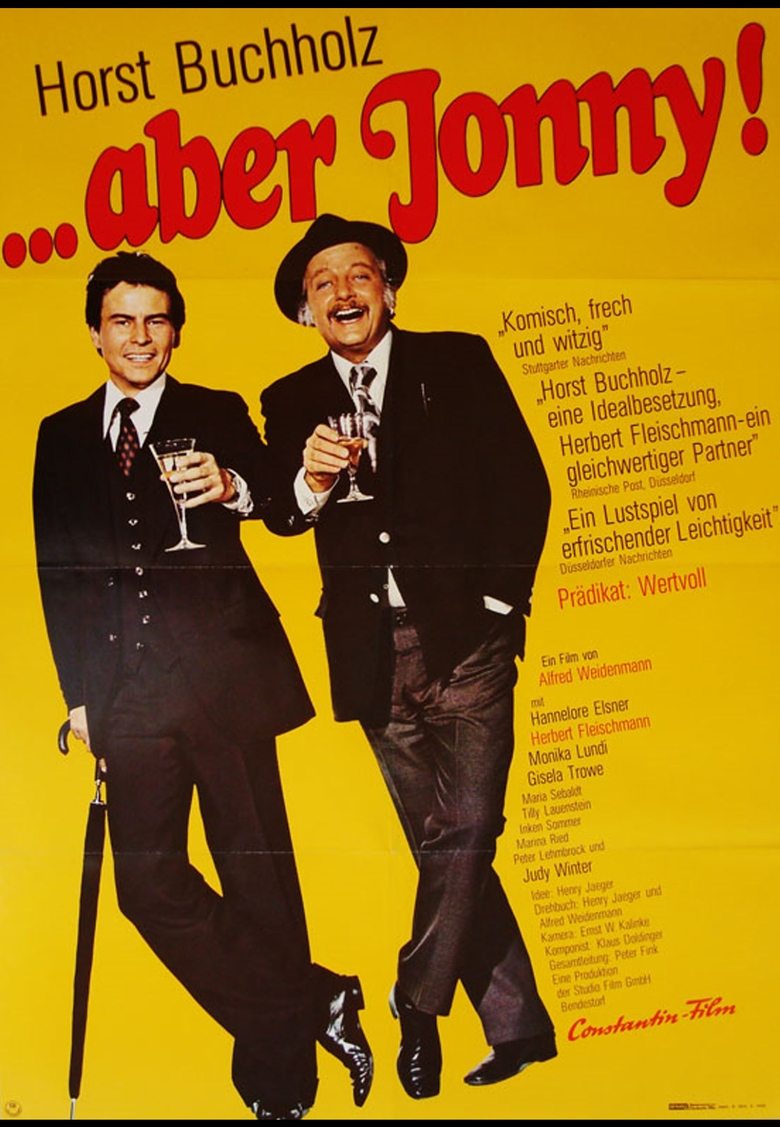
1973
Director
Alfred Weidenmann, Herbert Reinecker
Runtime
96 minutes
Average Rating
No ratings yetSynopsis
The charm of the beautiful Jonny is of a frightening effectiveness on the women. He uses it to create his company which offers his talents to lonely ladies. His business is going great and he is getting rich. But will Jonny be able to provide quality services for a long time?
Overall Score
Limited
Category Breakdown
LGBTQ+ Representation
The film operates within a strictly heteronormative framework. There is no discernible presence of non-cisnormative identities or same-sex intimacy.
Gender Representation
Narrative dynamics center on a male protagonist's charm and its effect on women. While women engage in economic transactions, the film reinforces conventional 1970s social roles.
Racial & Ethnic Diversity
Set in post-WWII Germany, the film reflects the demographic homogeneity of its era. It lacks non-white characters or intersectional racial complexity.
Religious & Cultural Diversity
The story follows a conventional trajectory of individual success within mid-century Western social norms. It does not critique capitalism, religion, or the family unit.
Disability Representation
There is no evidence of characters with visible or invisible disabilities. The narrative does not include neurodivergent or physically disabled individuals.
Strengths
Areas for Improvement
AI Analysis
This comedy is a product of its specific historical era, prioritizing mainstream entertainment over social disruption. The narrative relies heavily on established hierarchies and demographic homogeneity common to 1970s German commercial cinema. The film functions within a traditional framework, focusing on individual economic pursuit and social navigation. It avoids challenging Western institutions or exploring diverse identities, resulting in a narrow social landscape. Ultimately, the work adheres to the conventional social structures of its time, offering little in the way of progressive representation or intersectional depth.
1963
1964
1982
1961

1967
1974

1974
1963

1970
1968

1982

1973
No reviews yet. Be the first to share your thoughts on this movie!
Use the rating form above to leave a star rating and optional review.