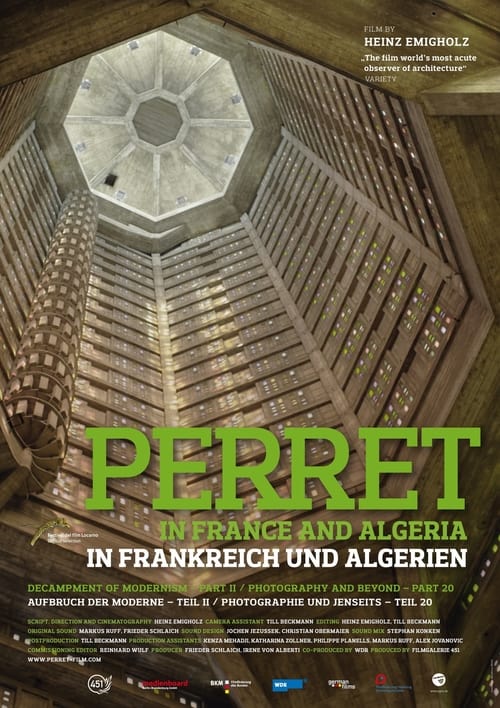
Perret in France and Algeria
2012
No user ratings available yet
Representation score: 1.2 out of 10

Representation Score
Minimal
2005
Director
Heinz Emigholz
Runtime
51 minutes
Average Rating
No ratings yetNew Showbiz Analysis
D’Annunzio’s Cave is an architectural documentary that emphasizes spatial observation over human narrative. By focusing solely on the rooms and furnishings of the Villa Cargnacco, the film sidesteps traditional storytelling methods. Since the primary subject is space rather than people, it lacks the human ability to act necessary for social or identity-based representation. The absence of a cast or dialogue renders conventional diversity metrics irrelevant to this type of film. Despite the historical context involving a controversial figure, the film adopts a detached, aestheticized viewpoint. It functions as a detailed study of design rather than a social or political commentary.
Category Breakdown
The film focuses on architecture and interior design without depicting characters or exploring LGBTQ+ themes.
This documentary centers on inanimate objects and the structure of the villa, without featuring human subjects or gender-related narratives.
The film documents a historical site in Lombardy, Italy, without featuring a diverse cast or exploring racial or ethnic identities.
The film presents a site designed by a figure linked to proto-fascist aesthetics, maintaining a neutral, observational stance without moral judgments.
The film does not depict human subjects, so there is no representation of physical or neurodivergent identities.
Present on Screen
Limited or Absent
Official Synopsis
Heinz Emigholz, the premiere purveyor of architectural oddities (Sullivan’s Bridges, Goff in the Desert), meticulously documents 15 rooms of the enormous Villa Cargnacco in Lombardy, Italy, designed by proto-fascist poet Gabriele D’Annunzio (1863–1938). The controversial figure spent 17 years designing the Vittoriale, a state museum on Lake Garda, and furnishing the Villa Cargnacco, which is part of the grand complex. This unusual documentary resulted from a photography session in the villa, when four friends—cinematographers Irene von Alberti, Elfi Mikesch, Klaus Wyborny and Heinz Emigholz—simultaneously filmed the rooms and furnishings of the villa in their own specific styles.
2012

1935

2001
1984

2019

2023
1996
2011
No reviews yet. Be the first to share your thoughts on this movie!
Use the rating form above to leave a star rating and optional review.