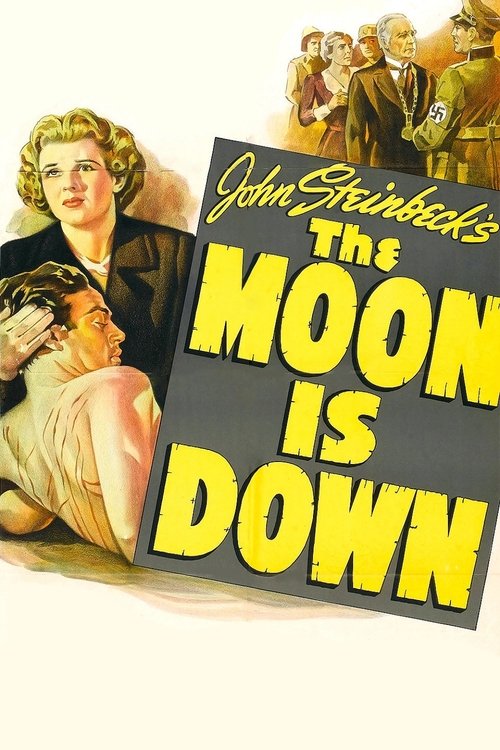
The Moon Is Down
1943
No user ratings available yet
Diversity score: 2.7 out of 10

1942
Director
Irving Pichel
Runtime
87 minutes
Average Rating
No ratings yetSynopsis
Englishman Mr. Howard is on a fishing holiday in eastern France when the Germans invade in 1940. Setting off to try and get back home he is persuaded to take along the two Cavanaugh children, and as his journey progresses his family keeps growing in size. Once in German-occupied northern France a new problem arises — the risk of being heard speaking English.
Overall Score
Minimal
Category Breakdown
LGBTQ+ Representation
The film adheres to the social mores of its era and folkloric roots. There are no depictions of non-cisnormative identities or same-sex intimacy.
Gender Representation
Character agency is largely distributed among male figures. Female roles are relegated to traditional domestic or secondary archetypes within established social structures.
Racial & Ethnic Diversity
The casting is homogeneous, reflecting a localized, ethnically uniform community. The film lacks intentional racial blending or non-white characters.
Religious & Cultural Diversity
The story functions as a cautionary tale regarding greed and social contracts. It reinforces traditionalist values and communal standards rather than systemic critique.
Disability Representation
There is no significant presence of characters with visible or invisible disabilities. The narrative does not engage with neurodivergence or physical impairment.
Strengths
Areas for Improvement
AI Analysis
The film operates as a traditional moral fable that prioritizes classical storytelling and moral absolutism. It functions to reinforce established social, gender, and cultural hierarchies rather than disrupting them. Because the narrative is rooted in a medieval European context and 1940s cinematic standards, it lacks intersectional complexity. The characters serve primarily as vessels for a didactic lesson on avarice and contractual integrity.
1943
1918
1941

1943
1940
1962
1958
1943

1942

1963
1940

1943
No reviews yet. Be the first to share your thoughts on this movie!
Use the rating form above to leave a star rating and optional review.