
Cemetery Junction
2010
No user ratings available yet
Representation score: 2.6 out of 10
Representation Score
Fair
1971
RDirector
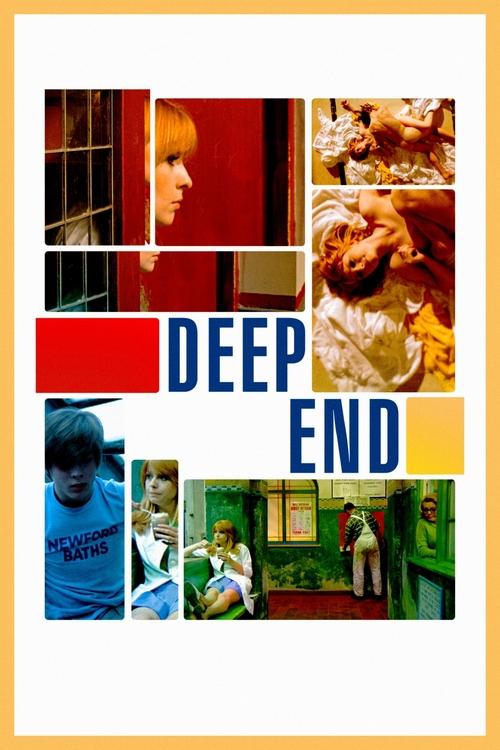
Jerzy Skolimowski
Runtime
92 minutes
Average Rating
No ratings yetNew Showbiz Analysis
Deep End is a formally innovative film that emphasizes psychological landscapes over traditional narratives. It successfully breaks down social hierarchies and conventional morality through its fragmented, non-linear structure. However, the film lacks demographic diversity. The social environment is largely homogeneous, offering little representation of racial or LGBTQ+ identities. The focus remains on the intense, obsessive relationship between the main characters. Ultimately, the film's strength lies in its exploration of urban alienation and subjective experiences rather than its inclusivity of diverse social groups.
Category Breakdown
The film does not feature explicit LGBTQ+ characters or explore non-straight relationships. It centers on a strong, intense connection between the main characters within a traditional romantic context.
The story challenges traditional gender roles by focusing on the female lead's unstable mental state. Her actions play a key role in driving the plot and challenging male dominance.
Set in 1971 London, the film features a mostly white European cast. It presents a uniform social setting with limited diversity.
The film uses postmodern techniques to emphasize personal emotional truth over rigid moral codes. It highlights urban isolation and societal fragmentation.
Psychological distress and mental instability are used as themes to highlight the human condition. They create tension but do not delve deeply into disability.
Present on Screen
Limited or Absent
Official Synopsis
London, England. Mike, a fifteen-year-old boy, gets a job in a bathhouse, where he meets Susan, an attractive young woman who works there as an attendant.
2010

1960

2001

1996
1997

1978

1993

2005
No reviews yet. Be the first to share your thoughts on this movie!
Use the rating form above to leave a star rating and optional review.