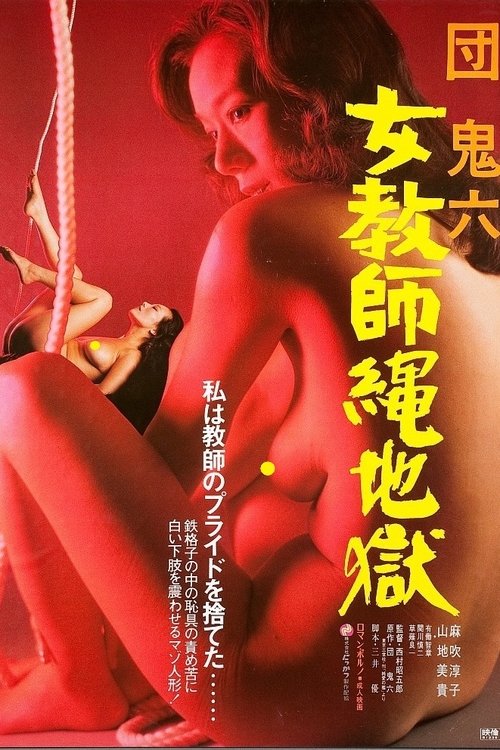
Female Teacher in Rope Hell
1981
No user ratings available yet
Representation score: 0.7 out of 10
Representation Score
Minimal
1986
Director
Shōgorō Nishimura
Runtime
70 minutes
Average Rating
No ratings yetNew Showbiz Analysis
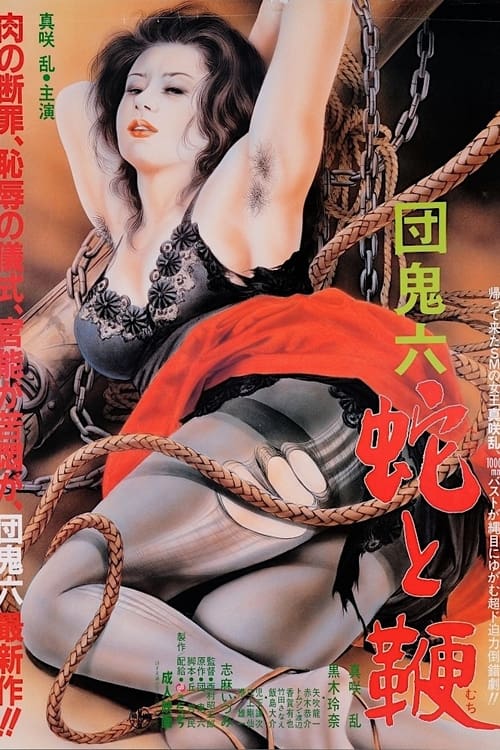
Snake and Whip operates within the transgressive framework of Japanese exploitation cinema. It prioritizes the depiction of traditional power imbalances and gendered subjugation over progressive representation. The narrative structure is built upon regressive clichés, specifically the victimization of a female subordinate by a male antagonist. This focus on dominance and individual sadism prevents any meaningful exploration of ability to act or diverse identities. Ultimately, the film functions as a study of predatory social hierarchies. It lacks the systemic critique or diverse character development required to move beyond established exploitation clichés.
Category Breakdown
The film lacks explicit evidence of LGBTQ+ characters or non-straight relationships. The narrative focuses on a predatory heterosexual dynamic between the protagonist and her employer.
The plot relies on harmful gender hierarchies and male entitlement. The female protagonist is framed as a passive victim of systemic cruelty rather than an active agent.
As a 1986 Japanese production, the cast and setting appear homogeneous. There is no indication of diverse casting or the subversion of ethnic norms.
The film explores themes of institutional abuse through a lens of individual sadism. It lacks a broader socio-political critique of cultural or capitalist structures.
There is no evidence of characters with visible or invisible disabilities within the provided narrative.
Present on Screen
Limited or Absent
Official Synopsis
A young woman gets a new job as an executive secretary. Her boss discovers that she resembles her late mother who he desired but lost to another man. Seeing his chance for revenge the boss and his sadistic circle of friends make plans to turn her into his personal sex slave.
1981

2002

1986

1981

1980
1974

1986

1987
No reviews yet. Be the first to share your thoughts on this movie!
Use the rating form above to leave a star rating and optional review.