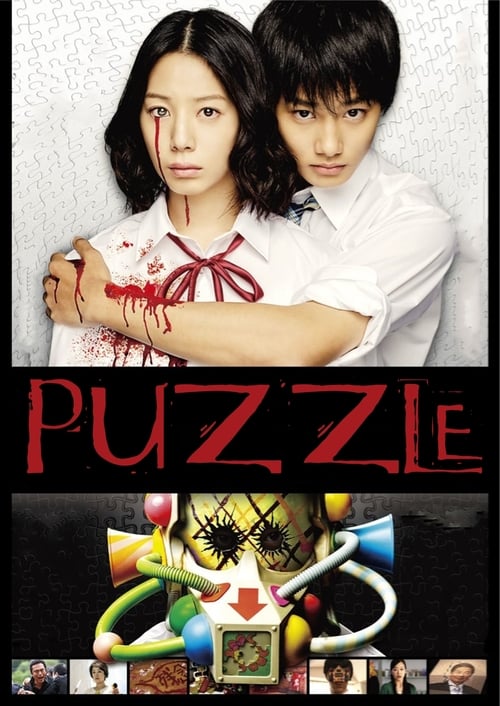
Puzzle
2014
No user ratings available yet
Representation score: 3.1 out of 10

Representation Score
Fair
2009
Not RatedDirector
Takashi Shimizu
Runtime
89 minutes
Average Rating
No ratings yetNew Showbiz Analysis
The Shock Labyrinth is a genre-driven psychological horror that prioritizes atmospheric tension over social commentary. While the narrative centers on female-led stakes and a central mystery involving Yuki, it remains within traditional storytelling frameworks. The film lacks multi-layered complexity, focusing instead on the fragmentation of the family unit and past trauma. It does not actively seek to disrupt established social or cultural hierarchies, adhering to the conventions of J-Horror. Ultimately, the production reflects a culturally homogeneous approach that emphasizes local authenticity over demographic blending or systemic critique.
Category Breakdown
The film does not include any explicit LGBTQ+ characters or stories. It focuses on a group of former friends without addressing non-traditional gender identities.
The story is driven by a female protagonist and revolves around a female-centric mystery. While it avoids some typical male-led horror clichés, it does not challenge traditional gender roles.
As a Japanese production, the film operates within a culturally homogeneous framework. It prioritizes local cultural authenticity without disrupting Western-centric casting norms.
The narrative uses a hospital setting to challenge the idea of medical institutions as inherently safe. However, it primarily follows standard psychological horror genre conventions.
A physical collapse serves as a key plot driver. There is no detailed exploration of neurodivergence or chronic illness beyond using vulnerability as a tension device.
Present on Screen
Limited or Absent
Official Synopsis
The horror-thriller follows a group of teenagers dealing with the disappearance of one of them, Yuki, at an amusement park's haunted house. On a rainy day 10 years later, Yuki inexplicably returns. However, no sooner is she united with her former friends than she collapses, and the group rushes Yuki to a nearby hospital. But after checking in, they discover that things are not quite as they seem at the medical center. As the night wears on, the group sinks deeper and deeper into the events from a decade ago that led to Yuki's disappearance.
2014
2003
2022
2000
2009
2011

2018
2006
No reviews yet. Be the first to share your thoughts on this movie!
Use the rating form above to leave a star rating and optional review.