
The Lovely Bones
2009
No user ratings available yet
Representation score: 4.1 out of 10
Representation Score
Good
2010
Not RatedDirector
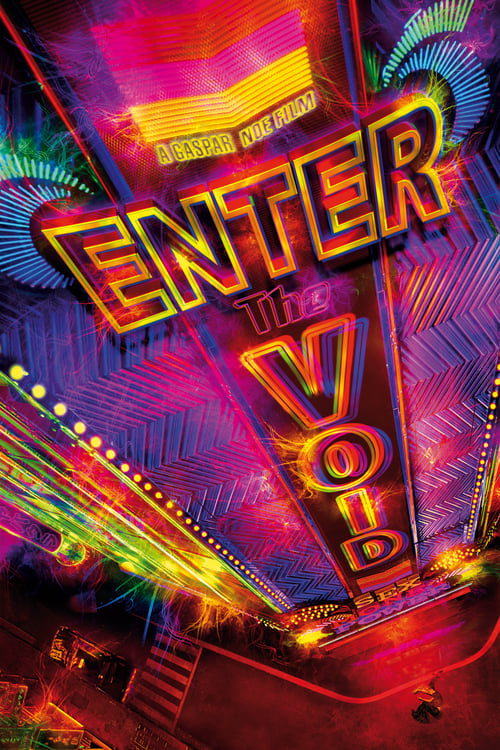
Gaspar Noé
Runtime
161 minutes
Average Rating
No ratings yetNew Showbiz Analysis
Enter the Void succeeds in challenging Western-centric narrative norms by immersing the viewer in a Japanese urban landscape. The film's strength lies in its cultural relativism and its refusal to adhere to traditional moral or religious structures. However, the film remains limited by its narrow focus on heterosexual relationships and its use of addiction as a mere aesthetic tool rather than a nuanced study of disability. While the setting is diverse, the character identities remain largely conventional.
Category Breakdown
The film focuses on heterosexual relationships and the protagonist's interactions with women. It does not explicitly center on queer narratives or non-traditional gender identities.
Female characters like Linda have significant autonomy and play a key role in driving the story within a dangerous urban environment. The film avoids traditional male-dominated structures, emphasizing female survival instincts.
Set in Tokyo, the film features a predominantly Japanese cast and environment. This shifts the focus away from Western settings, placing the story within a non-Anglo-Saxon context.
The narrative rejects organized religious dogma in favor of a secular, psychedelic spirituality. It critiques Western authority by depicting police as a violent, disruptive force.
Drug addiction and altered states of consciousness are used as stylistic narrative devices. These do not serve as nuanced portrayals of lived neurodivergence or physical disabilities.
Present on Screen
Limited or Absent
Official Synopsis
This psychedelic tour of life after death is seen entirely from the point of view of Oscar, a young American drug dealer and addict living in Tokyo with his prostitute sister, Linda. When Oscar is killed by police during a bust gone bad, his spirit journeys from the past -- where he sees his parents before their deaths -- to the present -- where he witnesses his own autopsy -- and then to the future, where he looks out for his sister from beyond the grave.
2009
2010
2017
2009
1995
2021
2010
1999
No reviews yet. Be the first to share your thoughts on this movie!
Use the rating form above to leave a star rating and optional review.