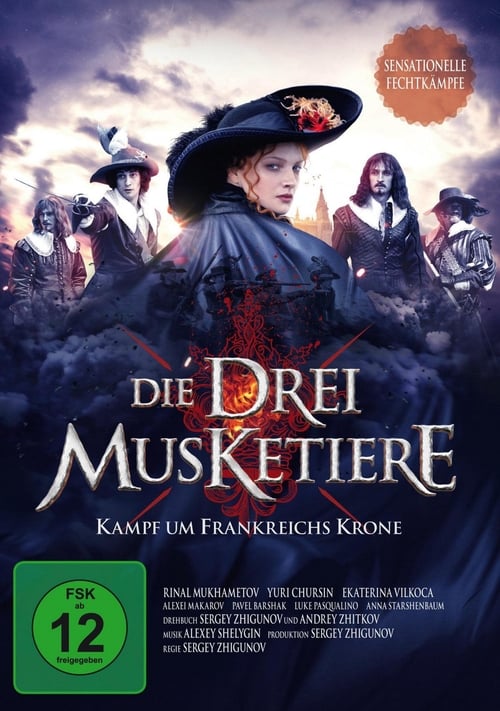
Tri mushketera
2013
No user ratings available yet
Diversity score: 2.6 out of 10
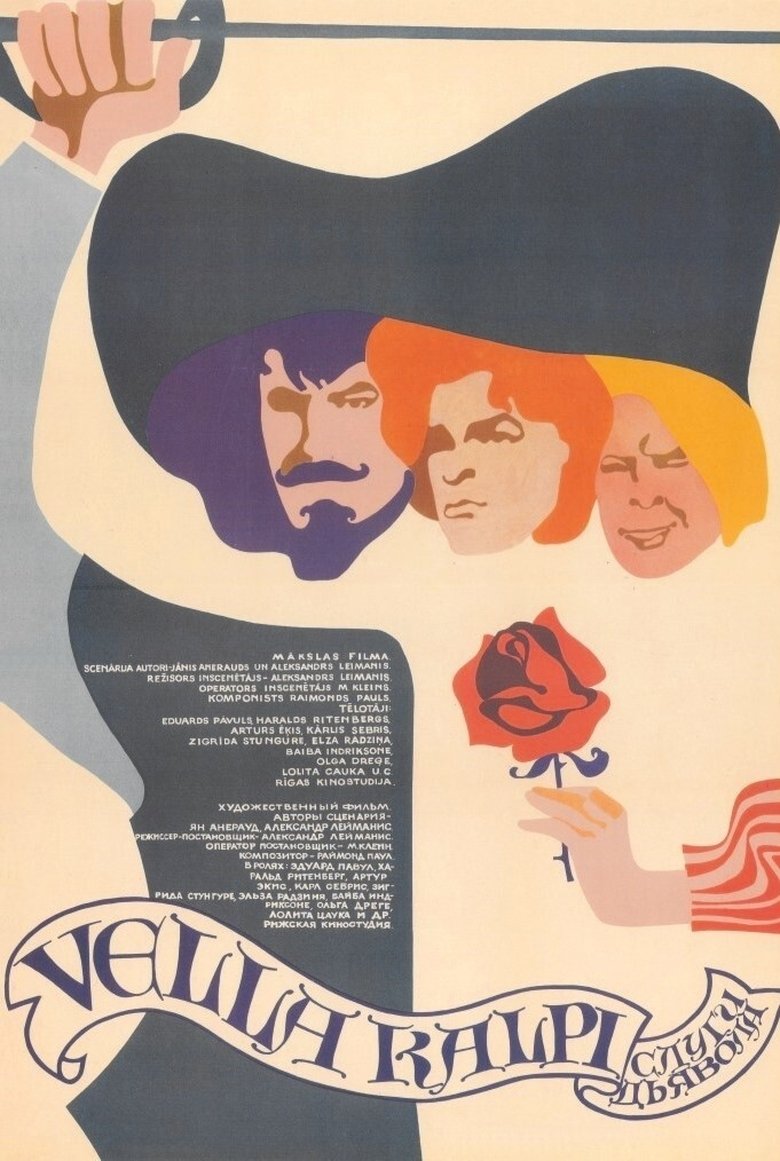
1970
Director
Aleksandrs Leimanis, Visvaldis Saulītis, Gunārs Sops
Runtime
90 minutes
Average Rating
No ratings yetSynopsis
In 17th-century Latvia, as Swedish and Polish armies march across the war-torn land, the corrupt councillors of Riga stand ready to hand over the city’s keys to whichever foreign power pays the highest price. But three jolly friends — Andris, Pēteris, and Ērmanis — together with their female companions Rūta, Anna, and Lēne, refuse to surrender without a fight. Rallying the people of Riga, they rise in a courageous struggle for freedom of their city.
Overall Score
Fair
Category Breakdown
LGBTQ+ Representation
The film focuses on traditional romantic pairings between three men and three women. There is no evidence of same-sex intimacy or non-cisnormative identities, reinforcing heteronormative structures.
Gender Representation
Female characters are described as brave, smart, and witty rather than merely decorative. While men lead the daring feats, the narrative emphasizes the joint efforts and combined minds of all six protagonists.
Racial & Ethnic Diversity
As a Latvian production, the film likely presents a culturally homogeneous cast. It lacks the intersectional breadth or global ethnic pluralism found in more modern, diverse cinematic narratives.
Religious & Cultural Diversity
The story centers on themes of justice and friendship against institutional authority. However, it relies heavily on conventional social structures and traditional romantic archetypes.
Disability Representation
The available information provides no mention of characters with visible or invisible disabilities. No assessment of neurodivergence or physical impairments is possible.
Strengths
Areas for Improvement
AI Analysis
Devil's Servants is a traditional adventure-comedy that leans heavily on regional folk archetypes. It succeeds in giving its female leads spirited, intellectual qualities, which prevents the film from falling into purely passive gender tropes. However, the narrative remains tethered to the social hierarchies and heteronormative romantic structures typical of 1970s regional cinema. The focus on established pairings and a homogeneous cast limits its broader representational impact. Ultimately, the film offers a collaborative dynamic between its six leads, but it does not attempt to deconstruct the conventional social or gendered norms of its era.
2013
1964
1969
2008
1954
1967

2018

2000

1951
1959

2012
1974
No reviews yet. Be the first to share your thoughts on this movie!
Use the rating form above to leave a star rating and optional review.